
Most athletes treat foam rolling as an afterthought, something they do for two distracted minutes while checking their phone between sets. That's a mistake. When done with even basic intention, ten minutes of self-myofascial release on a quality roller can cut next-day soreness, restore range of motion, and reset your nervous system between hard training days. The research is clear enough that physical therapists and strength coaches have been prescribing it for over a decade. What follows is not motivation talk. It is a breakdown of exactly what foam rolling does to your tissue, your blood flow, and your nervous system, and why each mechanism matters for people who train multiple days per week.
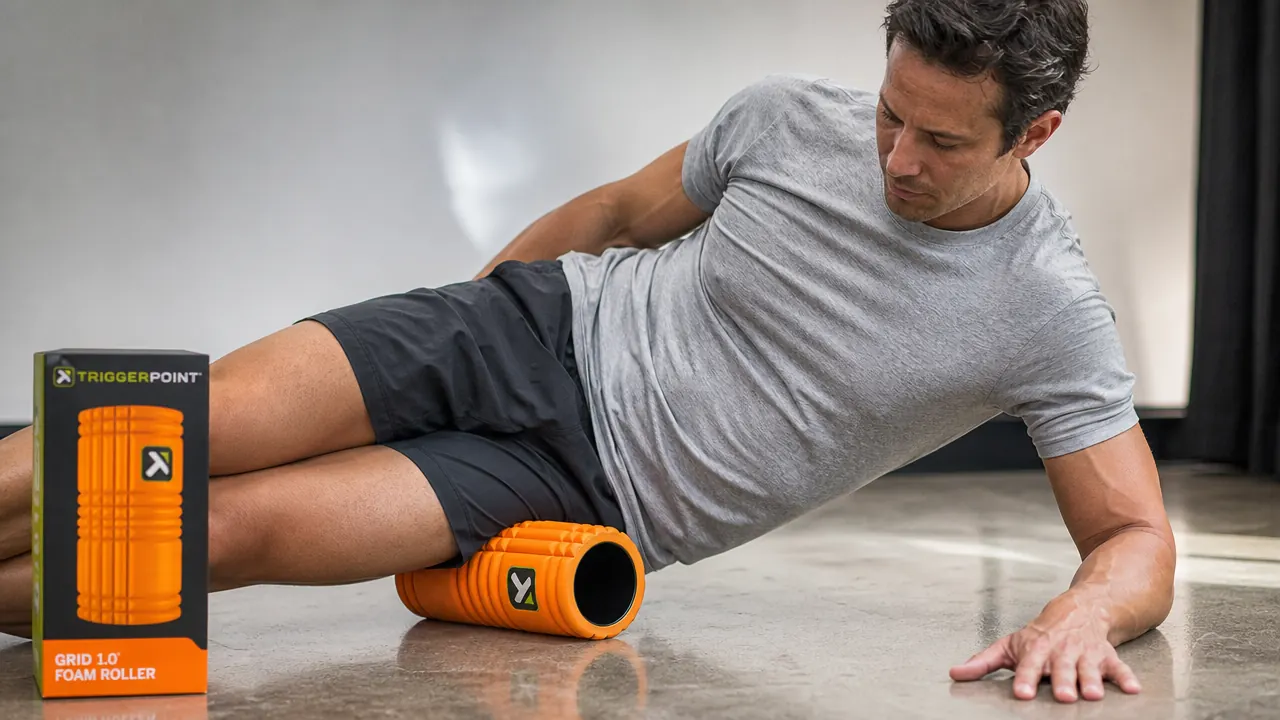
The tool I keep coming back to for this is the TriggerPoint GRID 1.0. The multi-density surface creates different pressure zones across a single pass, which is meaningfully different from a smooth or fully firm roller. It has held up through two-plus years of daily use in my work with clients without losing its shape. That said, these ten reasons apply to foam rolling in general. A good roller just makes each one easier to access.
Your recovery window starts the moment your last set ends. The TriggerPoint GRID is the tool serious athletes reach for.
4.7 stars, 31,000+ reviews. The 13-inch multi-density GRID fits in a gym bag and handles everything from thoracic spine work to IT band release.
Amazon Check Today's Price on Amazon →It Breaks Up Fascial Adhesions That Stretch Alone Cannot Reach
Fascia is the connective tissue that wraps every muscle, tendon, and organ. After heavy training, fascia can develop adhesions, essentially sticky spots where tissue layers bind together and restrict movement. Static stretching applies longitudinal force along the muscle fiber but does little to address cross-fiber restrictions. Foam rolling applies sustained compressive force across the tissue, which mechanically disrupts these adhesions. The TriggerPoint GRID's varying surface zones let you dial in different pressure profiles across a single pass rather than dragging uniform pressure from end to end.
It Increases Local Blood Flow Without Adding Training Stress
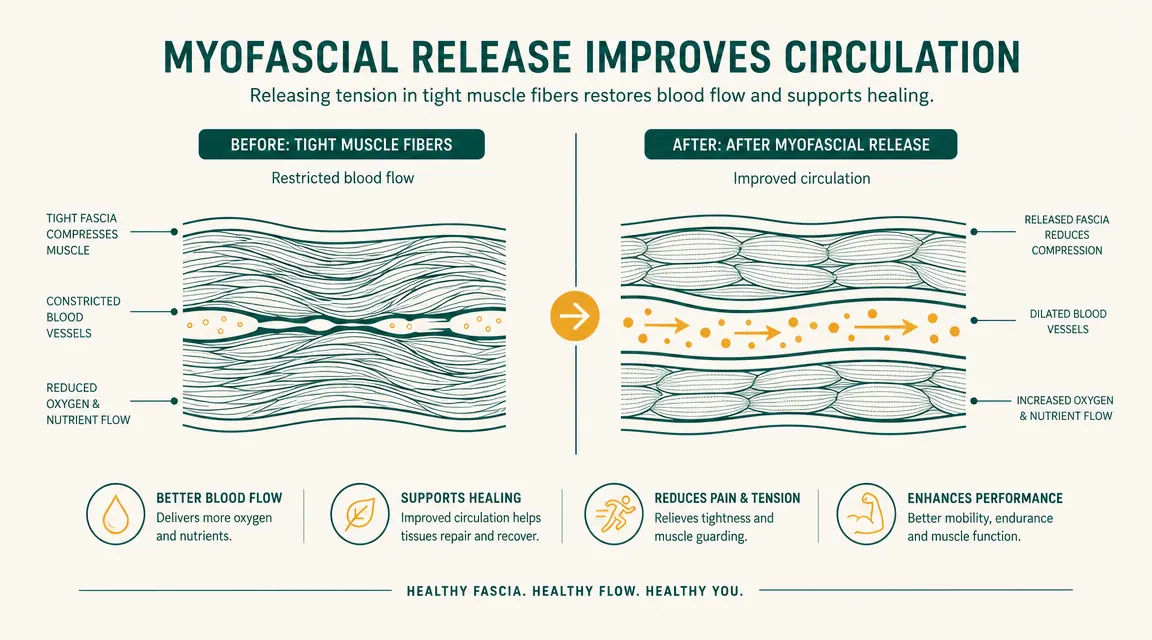
Sustained compression followed by release creates a hydraulic effect in the surrounding capillary beds. When you roll off a tight spot, oxygenated blood rushes back in. A 2015 study in the Journal of Athletic Training found that foam rolling post-exercise significantly reduced arterial stiffness in the minutes following a session. More blood flow means more nutrient delivery and faster clearance of metabolic waste products like lactate. You are getting a recovery stimulus without asking your muscles to do any additional mechanical work.
It Measurably Reduces DOMS Severity at 24 and 48 Hours
Multiple randomized controlled trials have now shown that 20 minutes of foam rolling immediately post-workout reduces delayed onset muscle soreness ratings at both the 24-hour and 48-hour marks compared to passive rest. The proposed mechanisms include the blood flow effect above, reduced inflammatory cytokine concentrations in the rolled tissue, and a desensitization effect through repeated mechanical input to the pain-sensing nerves in the muscle. The practical upshot: you feel less beat up the next morning, which means you show up to your next session closer to full capacity.
It Activates the Parasympathetic Nervous System After Hard Effort
High-intensity training leaves the body in a sympathetically dominant state: elevated cortisol, increased heart rate, heightened neural drive. Getting into a parasympathetic state is what actually triggers the repair cascade. Slow, sustained foam rolling, especially on large muscle groups like the thoracic spine, hamstrings, and hip flexors, activates mechanoreceptors that signal the vagus nerve and shift the nervous system toward rest and digest. Think of it as a structured deceleration protocol after a hard session rather than just sitting down and scrolling.
It Restores Range of Motion Without Reducing Muscle Force Output
This is the reason many strength coaches have switched from pre-workout static stretching to foam rolling. A well-documented problem with prolonged static stretching before lifting is that it temporarily reduces force production and power output by up to 8 percent. Foam rolling before a session has been shown in multiple studies to increase joint range of motion without that same inhibitory effect. You get the mobility you need for deep squats or overhead work without leaving your fast-twitch fibers half-asleep at the starting line.
It Addresses the Thoracic Spine, a Site Most Athletes Never Touch
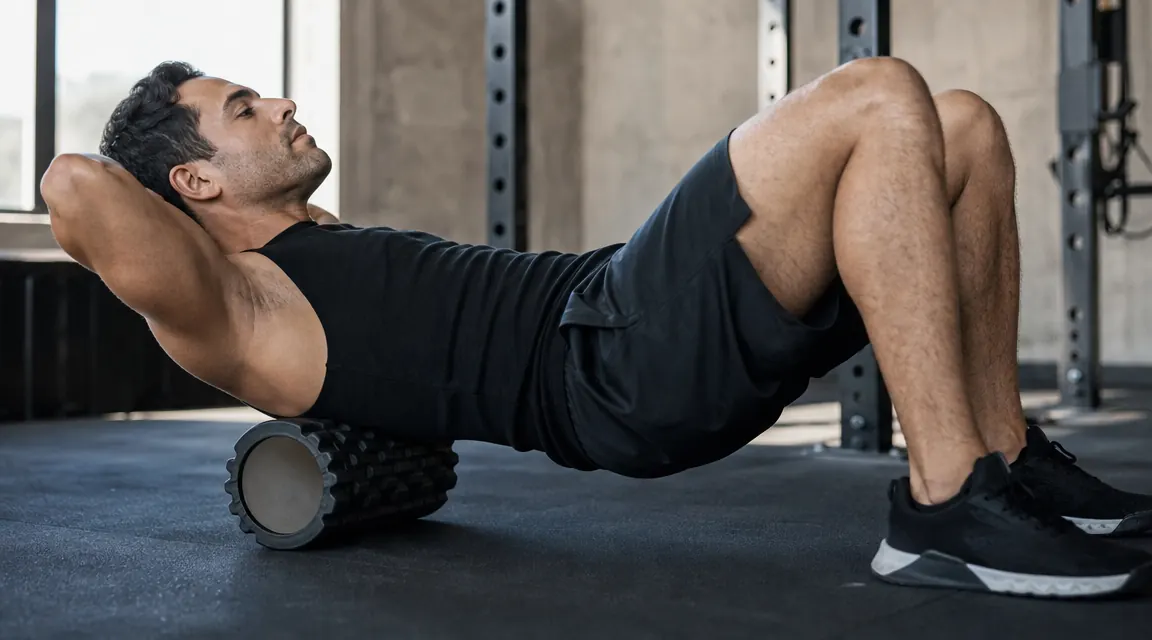
Chronic upper back stiffness is one of the most common limiters for both overhead pressing and running posture. The thoracic spine loses extension mobility faster than almost any other segment in sedentary and desk-bound adults, and most gym work does nothing to counteract it. Extending over a foam roller with arms crossed is one of the most effective interventions for thoracic extension restoration outside of hands-on manual therapy. Two to three minutes across the mid-back before upper body sessions produces a noticeable improvement in shoulder positioning and pressing mechanics. You will feel it on the first session.
It Reduces the Perception of Effort in Subsequent Training Sessions
A secondary finding from several DOMS studies is a reduction in perceived exertion during the workout that follows the post-exercise foam rolling session. Athletes who rolled after training reported not just less soreness but also lower RPE scores in their next session at the same absolute workload. The mechanism is not fully established, but the combination of reduced residual tension, better joint range of motion, and improved neuromuscular recruitment likely contributes. For athletes training four or five days per week, that drop in perceived effort compounds across a training block.

It Gives You Tissue Feedback You Cannot Get From a Stretch
When you roll and hit a tender zone, that is information. Chronic tension in the hip flexors shows up differently on a roller than in a static hip flexor stretch. The compressive input identifies latent trigger points, areas of restricted tissue that do not announce themselves until direct pressure is applied. Finding them early, before they escalate into compensatory movement patterns or actual injury, is one of the underrated returns on a daily rolling practice. It is a low-tech daily tissue audit that costs nothing but ten minutes.
It Improves Sleep Quality When Done in the Evening
The parasympathetic activation discussed in reason four has a downstream effect on sleep onset. Athletes who add ten minutes of slow foam rolling to a nighttime wind-down routine often report falling asleep faster and experiencing less nighttime muscle restlessness. Reduced residual tension in the hips, hamstrings, and lower back removes a low-grade proprioceptive input that can keep the nervous system alert when you are trying to downregulate. Deep sleep is where growth hormone release and cellular repair peak, so anything that improves sleep architecture is directly improving recovery quality.
It Is One of the Highest Return-on-Time Recovery Tools You Can Buy
A quality foam roller costs between $35 and $45 and lasts years if it maintains its shape. Compare that to a single massage therapy session ($80 to $120), a percussion gun worth considering ($70 to $200), or compression boots ($200 to $800). The TriggerPoint GRID at current price delivers a tool that directly competes with far more expensive interventions for the most common recovery problems active adults face: DOMS reduction, fascial restriction, and mobility loss. For the protocols that work best on this tool specifically, the deep-dive on <a href="/how-to-foam-roll-tight-hips-with-triggerpoint-grid">foam rolling tight hips and IT band</a> is worth reading alongside this piece. And if you want a broader look at the tool itself, the <a href="/triggerpoint-grid-foam-roller-review-long-term">long-term TriggerPoint GRID review</a> covers two years of real-world use.
What I'd Skip
Foam rolling is not the right tool for everything. Rolling directly on a joint, the knee itself, the ankle, or the lumbar spine is a common mistake that compresses joint surfaces rather than releasing soft tissue. Stay on muscle bellies and tissue proximal to the joint. Also skip rolling on acutely inflamed tissue in the first 24 to 48 hours after an injury. That is ice and rest territory, not compression. And if you are using a fully smooth, hard-plastic roller that has gone flat, you are likely not generating enough surface variation to get the myofascial release benefit. The multi-density surface on the GRID exists for a reason: uniform firm pressure tends to cause the surrounding muscles to guard rather than release.
The athletes who recover fastest are not the ones doing the most. They are the ones managing their tissue quality, their sleep, and their nervous system state between sessions. Ten minutes on a roller addresses all three.
If you train more than three days a week and you are not rolling consistently, you are leaving recovery on the table.
The TriggerPoint GRID 1.0 is the standard foam roller in most sports medicine and strength coaching facilities for a reason. 4.7 stars across 31,000+ real reviews. See today's price below.
Amazon Check Today's Price on Amazon →