
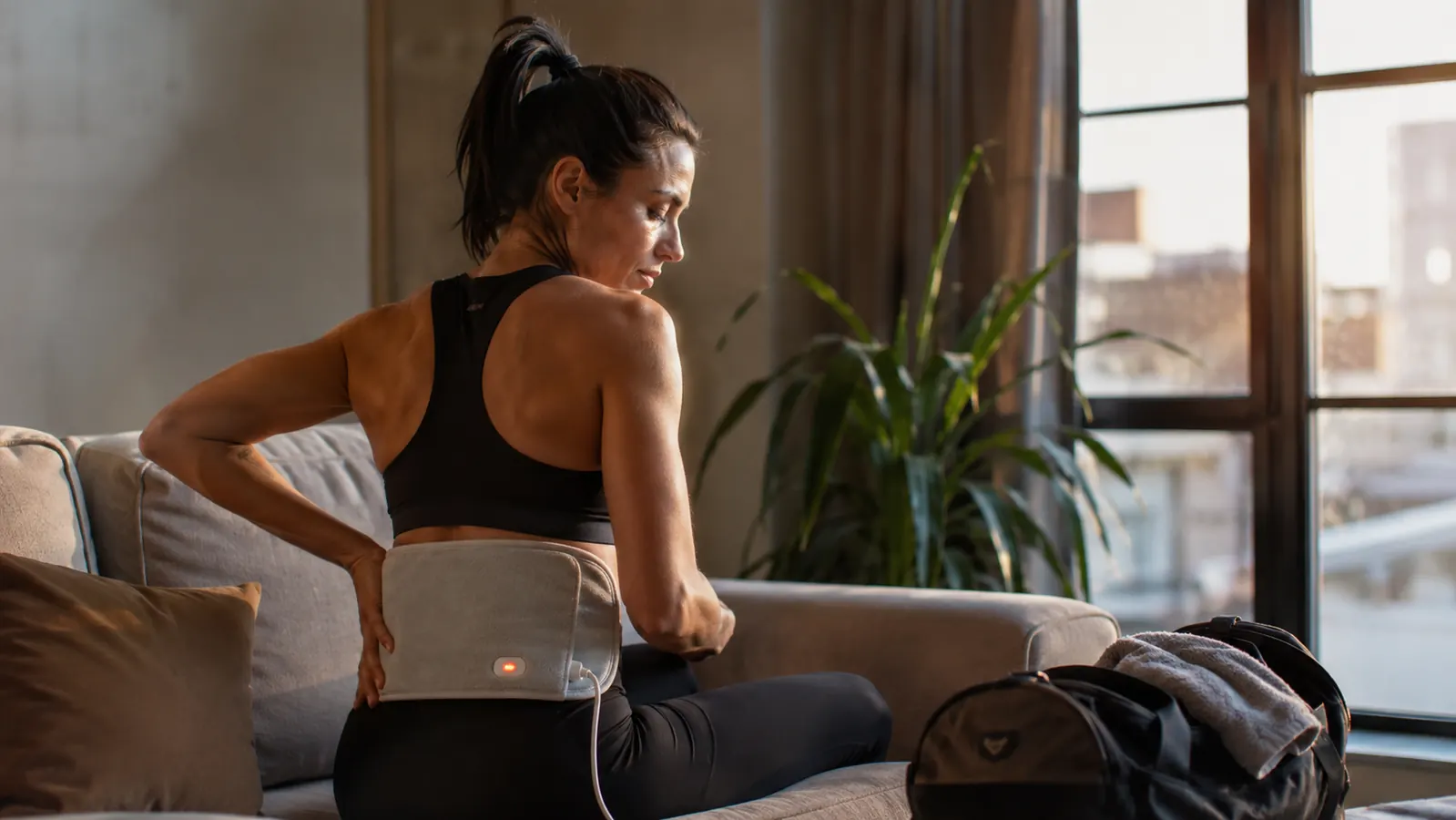
Every lifter has stood in front of the freezer at 9pm, wondering whether to grab the bag of frozen peas or plug in the heating pad. The muscle in question is screaming, the choice feels random, and you've probably done both at various times without any clear logic behind the decision. Here's the short answer: if you tweaked something during today's session, reach for ice. If you're dealing with the familiar next-morning tightness from yesterday's squats, reach for heat. Those two scenarios call for completely different physiological responses, and using the wrong one can actually slow your recovery down.
For most people who train 3-5 days a week, next-day muscle soreness (DOMS) and chronic tightness are far more common than acute injuries. That means the heating pad wins the daily-use argument by a wide margin. The Deepsoon Electric Heating Pad is what I use for that job, and after testing it against generic reusable ice packs for six months of post-training recovery, I'll walk you through exactly when each tool earns its place.
| attribute | left | right |
| attribute | left | right |
| attribute | left | right |
| attribute | left | right |
| attribute | left | right |
| attribute | left | right |
| attribute | left | right |
| attribute | left | right |
| attribute | left | right |
| attribute | left | right |
Where the Deepsoon Heating Pad Wins
The core argument for heat in a regular training context comes down to what DOMS actually is. Delayed onset muscle soreness is not a fresh injury with active swelling. By 24-48 hours post-workout, the acute inflammatory phase has already passed. What you're feeling is a combination of microtrauma-triggered metabolic waste accumulation, protective muscle guarding, and reduced tissue extensibility. None of those respond well to ice. Cold therapy at that stage restricts the blood flow you need to clear metabolic byproducts and deliver repair substrates to the working tissue.
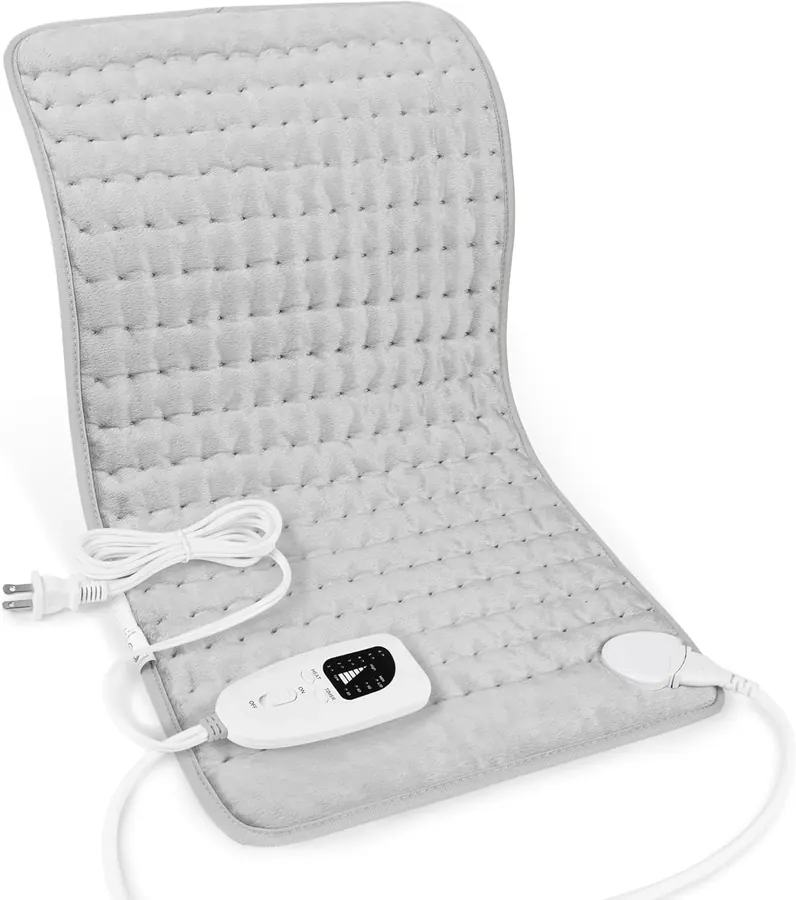
Heat does the opposite. Vasodilation from moist or dry heat increases local circulation, relaxes the smooth muscle in vessel walls, and reduces the protective guarding reflex your nervous system has thrown up around a sore area. The Deepsoon's 6 temperature settings let you start at a moderate level (the 104°F second setting is ideal for sensitive lower backs) and work up to the higher settings once the tissue has loosened. The moist heat mode, activated by dampening the included cover, penetrates connective tissue more effectively than dry heat alone because water conducts thermal energy into the tissue rather than sitting on the surface. For tight quads, hamstrings, or lumbar fascia after a heavy training day, that difference is noticeable within 10 minutes.
The size advantage is real, too. Reusable gel ice packs top out around 6 by 9 inches. The Deepsoon pad measures 12 by 24 inches, which is large enough to cover the full lower back in one placement or wrap partially around a quad. For the muscle groups most people actually need to address after lower body days, a small ice pack is genuinely inadequate coverage. You'd need two or three of them staged simultaneously to match what the heating pad delivers in a single application.
Where an Ice Pack Wins
Ice pack advocates are not wrong. They're just often applying the tool to the wrong scenario. Within the first 72 hours of an acute injury, controlled cold therapy is the right call. A rolled ankle, a pulled hip flexor, an elbow that took an impact during a fall, a knee that swelled up mid-session: these all involve active inflammation with genuine circulatory congestion and tissue edema. Applying heat to acute inflammation accelerates blood flow into an already-congested area, which worsens the swelling and extends healing time.
Cold therapy in the acute window works by doing three things: slowing nerve conduction velocity (which reduces pain), causing vasoconstriction (which limits additional fluid pooling), and reducing local metabolic rate (which limits secondary hypoxic tissue damage). A quality reusable gel pack, applied for 10-12 minutes on and at least 20 off, handles this job well. The limitation is time: after that 72-hour acute window closes and swelling has stabilized, the argument for continued cold therapy weakens considerably. You're no longer fighting active inflammation, and the tissue needs circulation to heal.
Your post-workout tightness isn't an injury. Stop icing it.
The Deepsoon Heating Pad covers the full back, runs moist or dry heat, and costs about the same as a single sports massage. Check today's price on Amazon.
Amazon Check Today's Price on Amazon →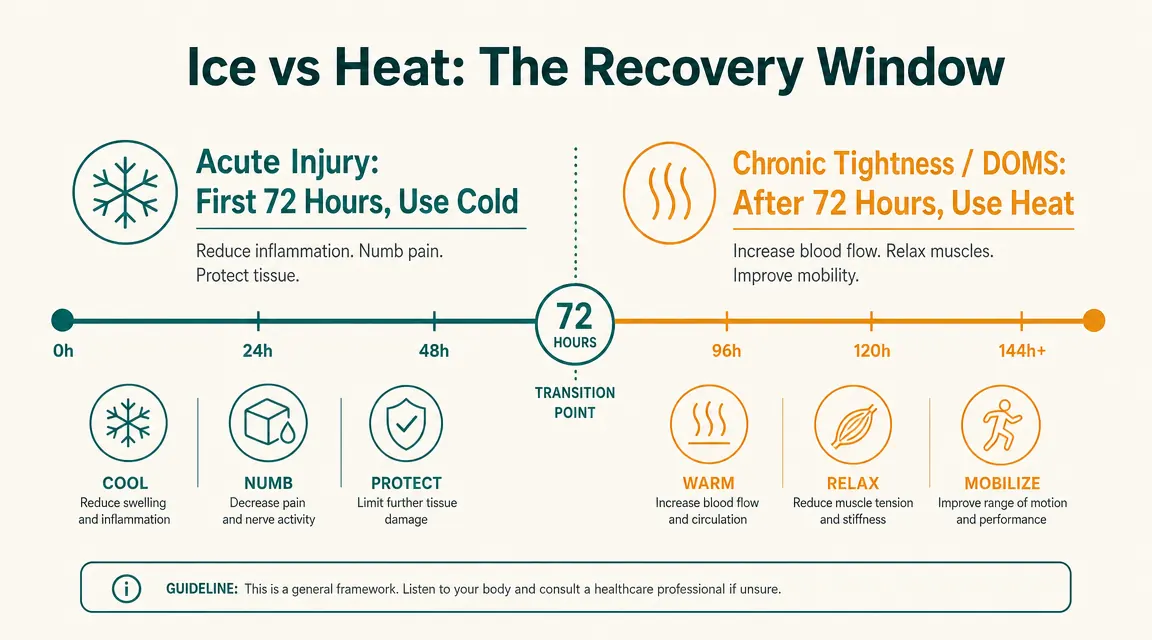
The Inflammation Phase Is the Deciding Factor
The single most useful mental model here is the inflammation phase. Sports medicine practitioners split soft tissue recovery into three windows: the acute inflammatory phase (0-72 hours), the proliferative phase (roughly 72 hours to 3 weeks), and the remodeling phase (3 weeks and beyond). Cold therapy is appropriate during the acute phase only, and only for genuine injury. The proliferative and remodeling phases benefit from heat, movement, and circulation because those are the biological processes that are doing the actual repair work.
DOMS falls almost entirely in the proliferative window by the time you feel it. That low-grade achiness you feel on Thursday morning after Tuesday's leg day is not a healing tissue trying to stay quiet. It's a tissue that has already moved past the initial damage response and is now doing the metabolic work of adapting. Heat accelerates that process. Ice, at that stage, just makes your muscles cold and temporarily numbs the discomfort without addressing what's actually going on underneath.
DOMS is not a fresh injury. Icing it after 72 hours doesn't speed up recovery. It just makes the tissue cold and temporarily numb while the real repair work waits.
What About Contrast Therapy
Contrast therapy, alternating cold and heat in timed cycles, has gotten a lot of attention in recovery circles and there is real physiology behind the idea. The proposed mechanism is a vasomotor pumping effect: vasoconstriction from cold followed by vasodilation from heat creates a kind of circulatory flush that accelerates metabolite clearance. Some research supports modest benefits for perceived soreness and range of motion. The catch is that it requires access to both modalities simultaneously, a level of discipline around timing most people don't maintain outside a clinical setting, and the evidence is notably stronger for full-body cold immersion combined with heat than for localized contrast cycling. A single Deepsoon session after a hard training day will move the needle more reliably for most people than trying to cycle a frozen gel pack and a heating pad in timed intervals on a sore quad.
Heat Before Stretching and Mobility Work
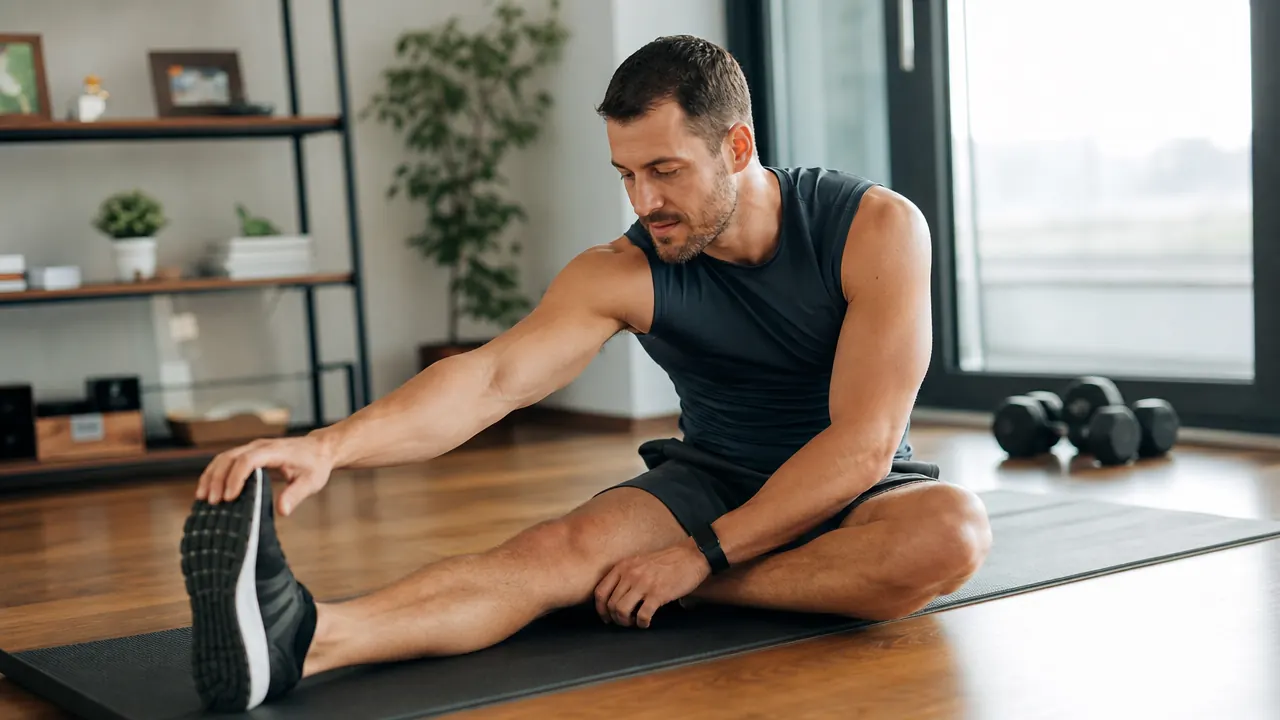
One use case for the heating pad that ice can never match is pre-stretch tissue preparation. Connective tissue extensibility improves with temperature. A muscle and its associated fascia at 104-113°F is measurably more pliable than the same tissue at resting temperature. Running a 15-minute Deepsoon session on tight hip flexors or hamstrings before a targeted mobility block is a legitimate way to increase your range of motion and reduce the injury risk of pushing into end range on cold tissue. Many physical therapists prescribe exactly this sequence before manual therapy or active stretching for chronic tightness cases.
Ice, conversely, should never be used pre-activity. Cold reduces force production, slows neuromuscular reaction time, and impairs rate of force development. Those are all things you actively want functioning during a workout. Applying an ice pack before training is a genuinely counterproductive habit that persists mostly because of outdated RICE protocol advice that has been substantially revised in sports medicine over the past decade.
Who Should Buy Which
If you train consistently and your primary recovery challenge is next-day soreness, chronic lower back tightness, tight hip flexors, or quad and hamstring stiffness after heavy sessions, the Deepsoon Heating Pad is the right tool. It covers the most common recovery scenarios for a regular lifter or runner. At its current price point, the moist heat capability and the large coverage area make it genuinely hard to beat in the sub-$20 tier of recovery tools. Keep a basic reusable gel ice pack in the freezer for the acute injury scenarios that come up occasionally. You need both in your toolkit, but you will reach for the heating pad far more often.
If you are currently dealing with a fresh tweak, a joint that swelled during training, or anything that has active inflammation and was injured less than 72 hours ago: ice is right, and you should see a sports medicine physician or physical therapist before you start applying heat to that area. Heat is not a substitute for a proper diagnosis on an acute injury.
The most-used recovery tool in my kit costs $16 and takes 30 seconds to set up
6 temperature settings, moist or dry heat, 12 by 24 inches of coverage. The Deepsoon pad handles the chronic tightness and DOMS scenarios that show up after 90% of hard training sessions. See today's price before it changes.
Amazon Check Today's Price on Amazon →