

If you have ever finished a long run and spent the next 48 hours walking down stairs like you aged 20 years overnight, this list is for you. Calf compression sleeves have been a staple in the running community for well over a decade, and the evidence behind them has matured from "maybe" to "here is exactly why they help." Whether you are managing shin splints through a marathon block, trying to survive the flight home after a race, or just tired of waking up with concrete calves, there are specific physiological reasons compression works for the lower leg in particular.
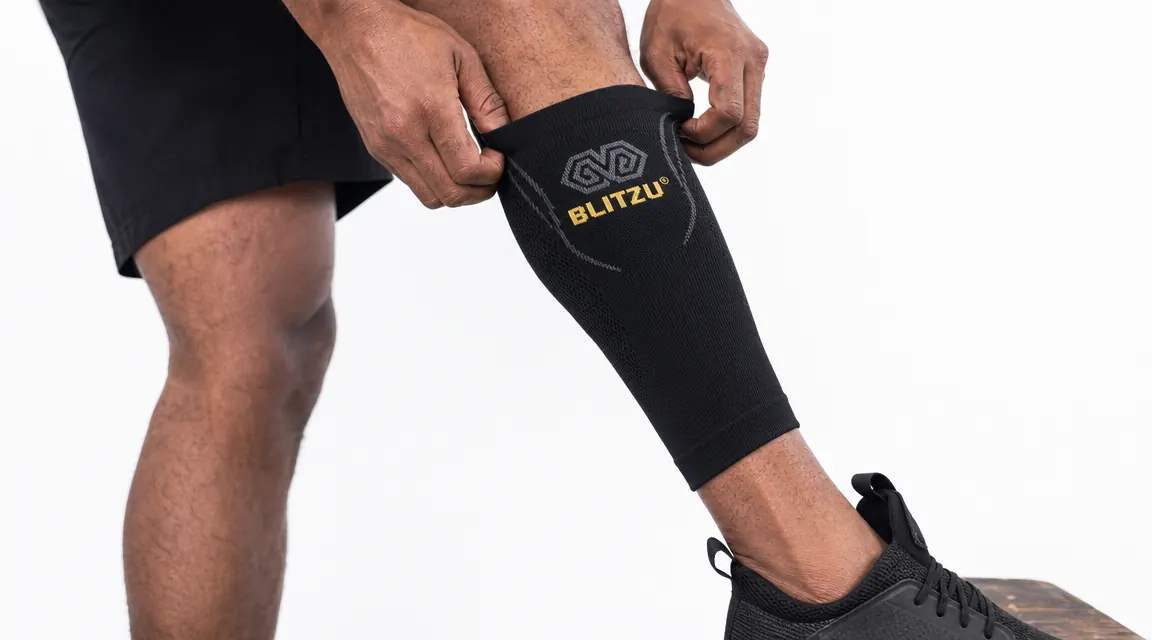
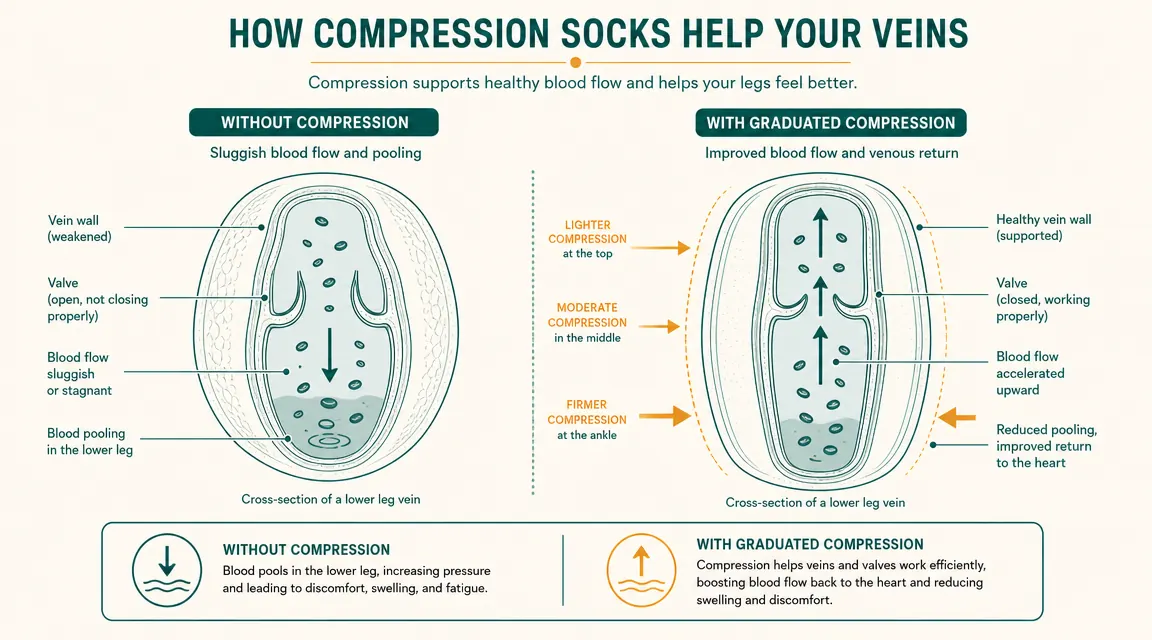
The BLITZU Calf Compression Sleeve is the top-selling footless compression sleeve on Amazon, with 24,154 reviews averaging 4.5 stars, and it sells for around thirteen dollars a pair. It is not the fanciest option on the market, but it does what compression is supposed to do: apply graduated pressure that is tighter at the ankle and gradually eases toward the knee. That gradient is everything. Here are ten reasons why that matters.
Your calves are taking more impact than any other muscle in your run. Give them the gradient compression they need.
The BLITZU Calf Compression Sleeve uses medical-grade graduated compression, fits most calves in sizes XS through XL, and costs about the same as a post-run smoothie.
Amazon Check Today's Price on Amazon →Graduated Compression Accelerates Venous Return
The calf muscle acts as a secondary heart, pumping deoxygenated blood back up to the lungs. After a hard run, that pump is fatigued and blood pools in the lower leg. Graduated compression, tighter at the ankle and progressively lighter toward the knee, mechanically assists that upward flow. The result is faster clearance of metabolic waste products like lactate and carbon dioxide, which translates directly into less post-run heaviness.
Reduces Delayed-Onset Muscle Soreness (DOMS) in the 24-48 Hour Window
A 2014 meta-analysis in the Journal of Strength and Conditioning Research found that wearing compression garments post-exercise significantly reduced DOMS ratings at 24 and 48 hours. The mechanism is partly circulatory (better lactate clearance) and partly mechanical: external pressure limits micro-swelling in the muscle tissue that drives that characteristic soreness. For runners doing back-to-back training days, that 24-48 hour window is exactly when you need every edge.
Decreases Tibial Vibration, Which Directly Cuts Shin Splint Risk
Shin splints (medial tibial stress syndrome) are caused, in part, by repetitive vibration of the tibia and the attached fascial tissue. At around 180 footstrikes per mile, that adds up fast on a long run. Compression sleeves dampen tibial vibration by holding the lower-leg soft tissue more firmly against the bone. Multiple studies on tibial acceleration have shown measurable reductions in vibration magnitude when runners wear lower-leg compression. If you are prone to shin pain, this one mechanism alone justifies the investment.
Improves Proprioception, Which Makes You a More Efficient Mover
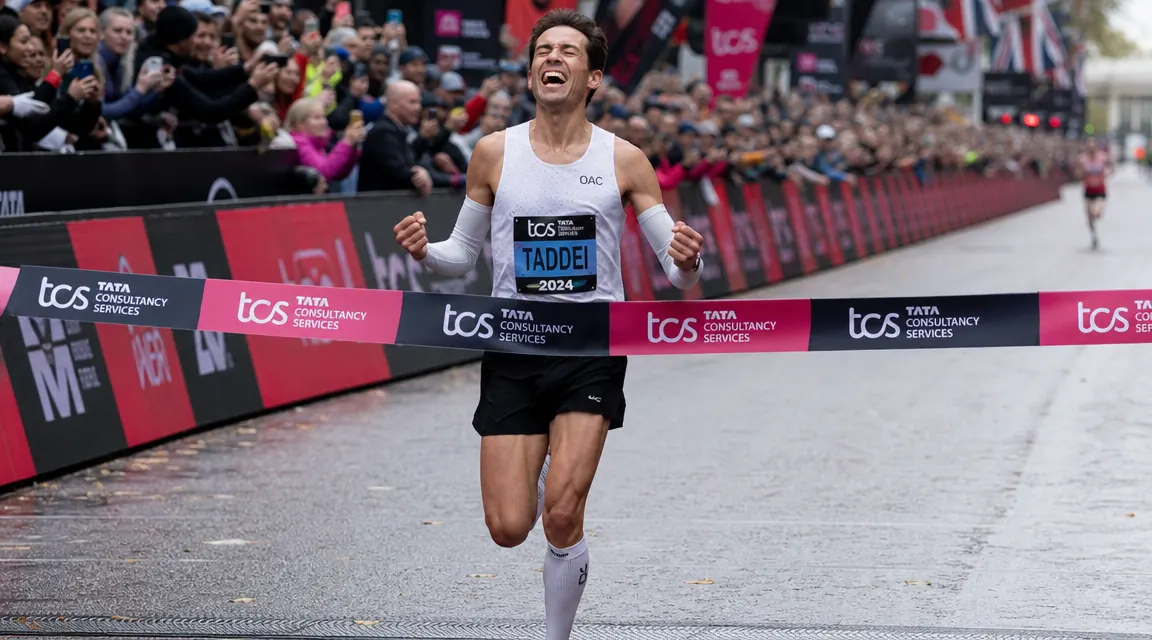
Proprioception is your nervous system's sense of where your limb is in space. Tight, fatigued calves mean degraded proprioceptive feedback, which subtly alters your gait and increases injury risk late in a race when form breaks down. The tactile pressure of a compression sleeve stimulates mechanoreceptors in the skin and muscle fascia, giving your nervous system a richer real-time signal about foot strike and ankle angle. It is one reason elite marathoners wear them not just for recovery, but during competition.
The calf takes three to four times your body weight per stride. Compression is not a luxury for that muscle group. It is maintenance.
Supports the Soleus During Hill Repeats and Long Slow Distance
The soleus, the deeper of the two main calf muscles, is the primary load-bearing muscle during long-distance running at aerobic pace. It is also the first muscle to fatigue on climbs. Compression sleeves wrap around both the gastrocnemius (the visible outer muscle) and the soleus, providing circumferential support that reduces the lateral expansion of the muscle belly under load. Runners who have added calf sleeves to their hill days consistently report less calf pump and a longer window before tightness sets in.
Manages Edema After Long Runs and Marathons
Finishing a marathon or ultra means fighting gravity for four or more hours while your vascular system is under sustained stress. Post-race lower-leg swelling (edema) is nearly universal at those distances. Wearing compression sleeves immediately after finishing, and for the first two to four hours of recovery, measurably reduces fluid accumulation in the interstitial tissue. The BLITZU sleeve's footless design means you can keep it on while changing shoes and still benefit during the car ride home or on a post-race flight.
Reduces Deep Vein Thrombosis Risk on Post-Race Flights
This one matters more than most runners realize. Long flights after marathons combine three DVT risk factors: prolonged immobility, dehydration from racing, and vascular endothelial damage from hours of high-impact running. Compression stockings and sleeves are a first-line recommendation from travel medicine physicians for exactly this scenario. A calf sleeve providing 15-20 mmHg of graduated compression keeps venous blood moving during a five-hour cross-country flight in a way that passive sitting cannot.
Keeps the Achilles Tendon Warmer Between Efforts
In cold weather training, the Achilles tendon loses compliance faster than the surrounding muscle tissue because it has minimal blood supply. A cold, stiff Achilles is a torn Achilles waiting to happen. The insulating effect of a compression sleeve, even a lightweight one like the BLITZU, maintains tissue temperature between intervals or during walking cooldowns in cold conditions. Runners who train year-round in climates below 45 degrees Fahrenheit have noted this as a specific reason they keep the sleeve on even in the warm-up phase.
Provides Low-Grade Active Recovery During Everyday Wear
The recovery window does not end when you get home from your run. Wearing a compression sleeve during a workday that involves a lot of standing or walking keeps the circulatory benefit going passively. Many runners wear theirs during teaching shifts, airport walks, or on their feet at work after a morning long run. The BLITZU sleeve is thin enough to fit under most pants and does not look like medical hardware, which matters if you are wearing it to a standing desk or a retail job.
Costs Less Than One Mile of Running Shoes Over Its Lifetime
Running shoes depreciate by roughly a dollar per mile. A pair of BLITZU calf sleeves at today's price, washed cold and air-dried after each use, will hold compression integrity for 200 or more runs. At that rate, the per-run cost rounds to single cents. Compared to a compression boot system running several hundred dollars, or a massage therapy session at a specialty clinic, calf compression sleeves are the most accessible circulatory recovery tool a runner can own. They travel in a pocket, do not require power, and work immediately.
What I'd Skip Instead
Compression socks do the same job but cover the foot, which creates sizing complexity and makes on-the-fly transitions between shoes harder. They are the better choice if you have plantar fascia issues that also need support, but for purely calf and shin-focused recovery, the footless sleeve is cleaner. Knee-high compression tights are another option, but they are heavier, harder to wash daily, and more expensive. For most runners dealing specifically with calf pump, DOMS, or shin splint management, a dedicated calf sleeve is the more targeted and practical tool. For a deeper look at how these two options compare, see the full breakdown in Calf Compression Sleeve vs Compression Socks.
Compression is one of the few recovery tools that works both during a run and after it. That dual-use value is hard to beat at this price point.
24,154 runners gave it 4.5 stars. At the current price, you can test it on your next long run without committing to anything.
The BLITZU Calf Compression Sleeve is available in sizes XS through XL and ships Prime. If sizing runs snug, go up one size. The graduated compression pattern holds up through repeated machine washing on cold with air drying. For more on what to expect across a full training block, read the <a href="blitzu-calf-compression-sleeve-review-long-term">4-month training review</a>.
Amazon Check Today's Price on Amazon →