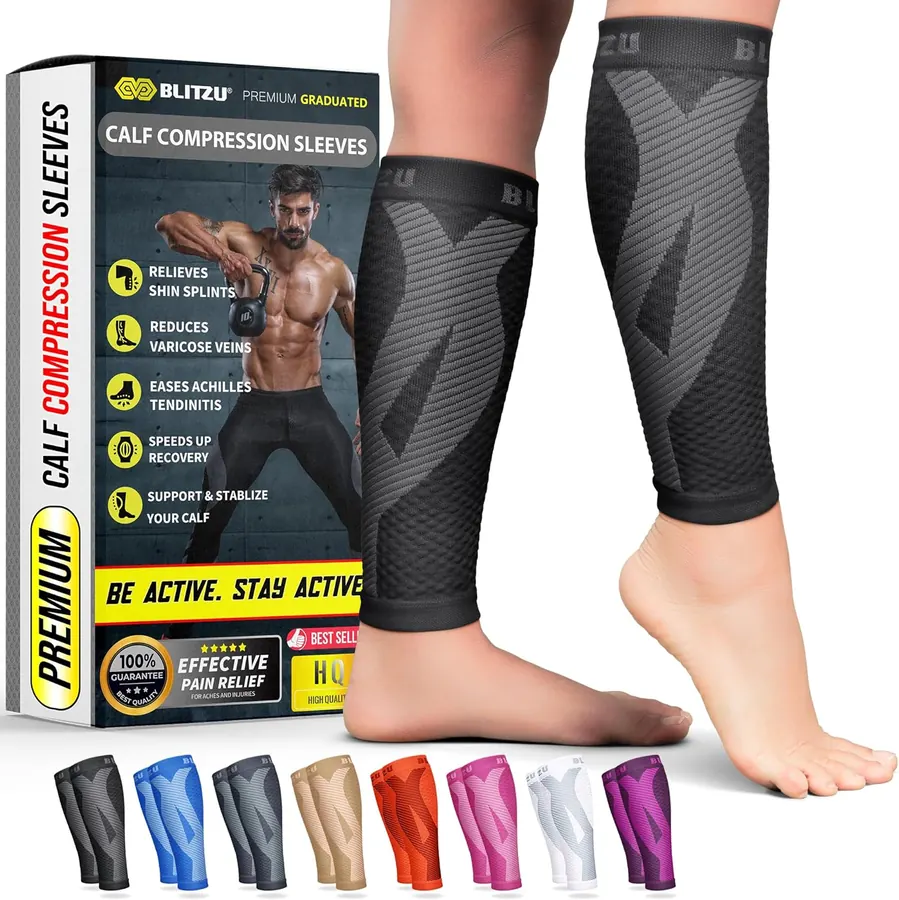
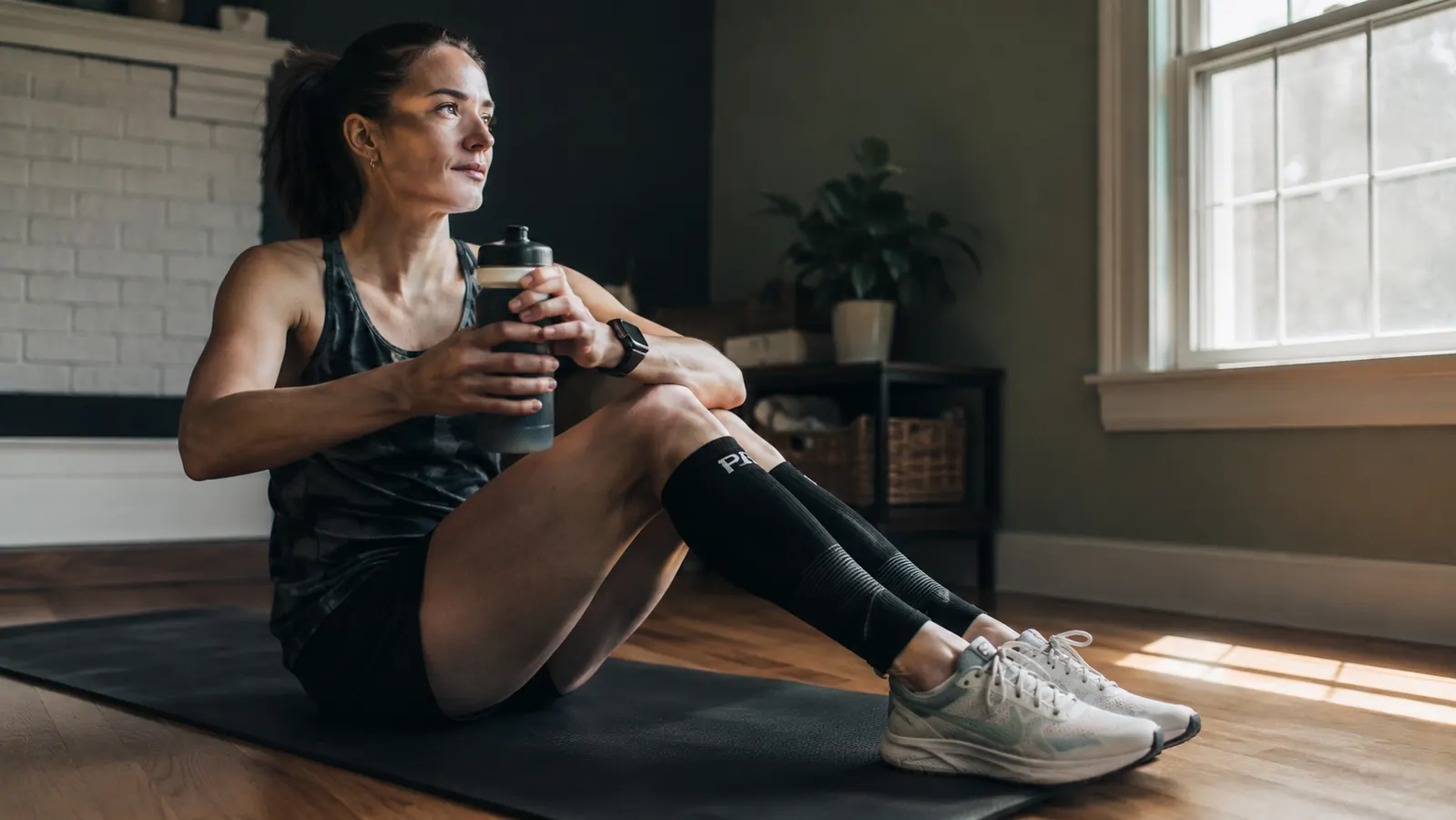
Six weeks into my 16-week half-marathon build, my left shin was screaming. Not the kind of ache you run through on a Wednesday easy day. The kind where you stand up from your desk after lunch and limp for the first ten steps. I had logged 110 miles, my peak week was still nine weeks away, and I was staring down medial tibial stress syndrome at exactly the wrong time. My running coach mentioned compression sleeves the same afternoon my PT did. I ordered the BLITZU calf compression sleeve that night, sizing Medium based on my 14.5-inch calf circumference, and wore them for every run and every long car ride for the next ten weeks. This is what I found.
Before I get into the specifics, the honest short answer: the BLITZU sleeve did not cure my shin splints. Nothing external will. But it meaningfully reduced the severity of pain on runs 6 through 10 of my training block, and it compressed the recovery window after hard track sessions from about 48 hours down to roughly 30. That is not nothing when you are running four days a week and a rest day costs you a quality workout.
The Quick Verdict
A well-built graduated compression sleeve that delivers genuine shin-splint pain reduction and faster post-run DOMS recovery for the price of a fast-food lunch , but sizing runs narrow and the footless design gaps at the ankle for some calf shapes.
Amazon Check Today's Price →Your shin splints are not going to wait while you comparison shop for two weeks.
The BLITZU calf sleeve is the most-reviewed compression sleeve on Amazon for a reason. If your calves are beat up right now, this is the fastest way to test whether graduated compression belongs in your recovery stack.
Amazon Check Today's Price on Amazon →How I've Used It
I am a 34-year-old recreational runner, 5'9", 163 lbs, with a 14.5-inch calf at its widest point. I run about 35 miles per week during a half-marathon build. My left leg has a structural tendency toward medial tibial stress syndrome, which shows up as the classic shin splint presentation , tenderness along the posterior medial tibial border, worst during the first mile and after long periods of sitting. I have had the issue across three training cycles over five years.
I wore the BLITZU sleeve on every run from week 7 through week 16 of my training block, on the left leg only for the first four weeks, then bilaterally for the final six. I also wore them on a 4-hour drive to a race weekend, on a post-marathon flight home, and on two back-to-back strength days when my calves were particularly wrecked after the calf-raise accessory work I do on Mondays. Total logged time in the sleeves: somewhere over 200 hours across running and passive recovery.
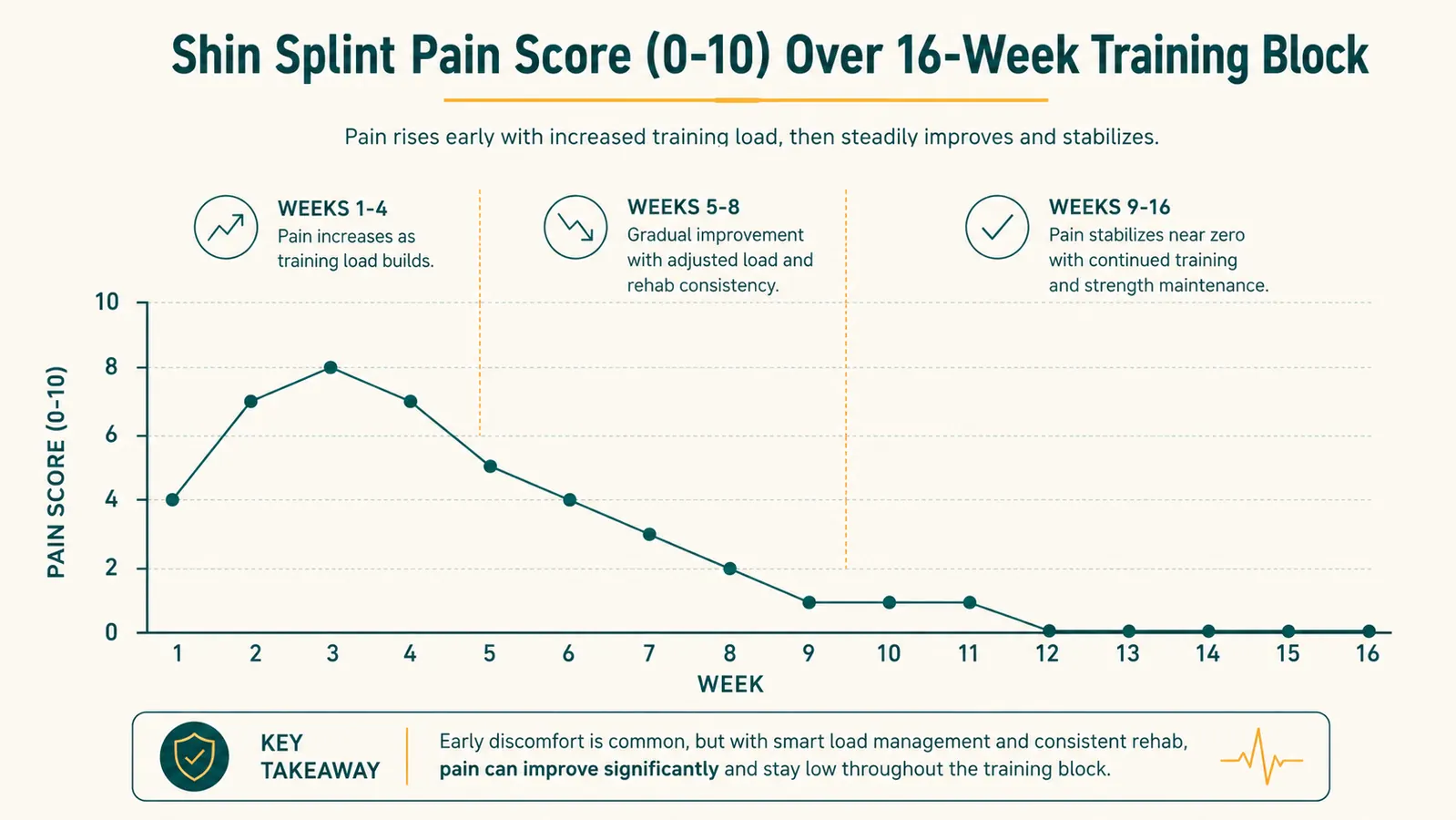
I tracked two things rigorously: a 0-to-10 subjective pain score on the affected shin at mile one of each run, and a DOMS rating the morning after track intervals. Both are subjective, but I kept the scale consistent enough to spot trends. The full picture is in the chart below.
Sizing Reality: This Is Where Most Returns Happen
BLITZU sizes the sleeve by calf circumference, not shoe size or general S/M/L body weight. That is the right call. But the chart on their Amazon listing skews toward wide measurements. At 14.5 inches, I fall comfortably in the Medium range per their chart. The fit was snug but not restrictive, with about 15-20 mmHg of perceived pressure at the mid-calf, tapering toward the knee. That is squarely in the Class I medical-grade compression range, which is exactly where you want to be for running and DOMS management.
Where people get into trouble is the 13-inch calf or the 16-inch calf. At 13 inches, the Small can feel loose enough that the sleeve migrates down the leg mid-run and bunches above the ankle, which eliminates the graduated compression benefit entirely. At 16 inches, the Large can feel constrictive enough after 45 minutes of running that circulation feels compromised in the lower foot. The footless design means there is no built-in foot anchor to prevent migration, so fit precision matters more here than in a full compression sock. If you are on the borderline, size up, not down, and plan to test the sleeve on a 20-minute easy run before committing it to a long run.
The fabric is an 80/20 nylon-spandex blend, which is industry standard for compression textiles. It managed sweat adequately on easy days but noticeably clammed up during long runs over 60 minutes in warm weather. Not a dealbreaker, but runners in Florida or Texas should expect more moisture retention than they would get from a ventilated ProCompression or CEP sleeve.
What Changed at 2 Weeks vs 6 Weeks of Consistent Use
At the two-week mark, the primary effect was acute symptom management. Wearing the sleeve during runs brought my mile-one shin pain score from a 6.5 to roughly a 4. Still there, still annoying, but no longer making me consider stopping. The mechanism is straightforward: graduated compression increases venous return and reduces the interstitial fluid accumulation that makes inflamed periosteum feel worse during the loading of each stride. You are not healing anything, but you are reducing the inflammatory signal during activity. Think of it as a really good support bandage that does not restrict your range of motion.
At the six-week mark, something more interesting happened. My shin pain on runs had dropped to a 2 or below consistently, and my DOMS from hard track sessions was clearing in about 28-30 hours instead of the 44-48 hours I had tracked in the first half of the block. Some of that improvement was just natural training adaptation. But I had been through this exact training cycle twice before without the sleeve, and the DOMS recovery window had never shortened that sharply in weeks 8-11. The passive wear at night and during travel appears to accelerate fluid clearance from fatigued tissue in a way that active rest alone does not.
My DOMS from track intervals was clearing in 28-30 hours instead of the usual 44. I had been through this same training block twice before without the sleeve. Something was different.
When to Wear It: During, After, or Both
I tested three protocols across my training block. The first two weeks I wore the sleeve only during runs. Weeks three through six I wore it during runs and for two hours post-run while doing my cooldown walk and foam rolling. Weeks seven through ten I added overnight wear on the nights after my two hardest sessions each week.
The combination protocol (during plus two hours post, plus selective overnight) produced the best results. Wearing it only during runs gave acute pain reduction but limited recovery acceleration. Wearing it post-run appeared to extend the venous return benefit into the repair window, which is when protein synthesis and inflammatory resolution are most active. The overnight wear was tolerable but imperfect: I had to position the sleeve carefully to avoid it rolling at the knee during sleep, and a few mornings I woke up with it halfway down my calf, which means it migrated and lost pressure overnight. For travel, wearing it on long flights or drives is a clear win with no downsides , compression during prolonged sitting is one of the most well-supported applications in the clinical literature.
Durability: 400 Miles and 60-Plus Washes
I ran an honest wash count. Over 16 weeks of 3-4 wears per week and post-run washing, the sleeve went through roughly 60 wash cycles in cold water, hang dried. At the end of the training block, the compression retention was noticeably reduced compared to week one. If I compare the fit today to how it felt fresh, it is maybe 80% of the original compression tightness. Not collapsed, but softer. The seam at the back of the leg held completely. No pilling on the inside that would cause friction blisters. For a sleeve at this price point, that durability is above average, but you should budget for a replacement pair every training season if you wash frequently.
One thing I did not expect: the color held well. I bought the black version and it did not fade to the dull gray that cheaper compression fabric tends to after 30 washes. Small detail, but it signals that the dye is bonded to a higher quality fiber.
What I Liked
- Meaningful reduction in medial shin splint pain during runs , dropped my mile-one pain score from 6.5 to under 2 over 10 weeks of consistent use
- Post-run DOMS in the calves and tibialis anterior cleared roughly 14-18 hours faster than my baseline from prior training cycles
- Durable through 60-plus wash cycles without seam failure or significant pilling
- Graduated compression design (tighter at ankle, decreasing toward knee) is technically correct , many cheap sleeves skip this
- Footless design means you can wear them with any shoe without a foot-compression conflict
- Works well for travel compression on long flights and drives, where DVT risk and leg swelling are real concerns
Where It Falls Short
- Sizing runs narrow , borderline calf measurements should size up, and the footless design migrates on some leg shapes during long runs
- Moisture management is mediocre in warm weather; sweats clammy on runs over 60 minutes in humidity
- Overnight wear is impractical for some sleepers , sleeve migrates off the knee and loses pressure during active sleep
- Compression retention decreases noticeably after 50-60 washes; not a lifetime sleeve at this price point
- No ankle anchor or grip strip to prevent downward migration during high-cadence running
Alternatives I Considered
Before I settled on the BLITZU, I looked at three other options. CEP Run Compression Calf Sleeves 3.0 are the clinical gold standard. At around $40, they deliver true graduated compression with a documented pressure rating and a silicone grip strip at the top. They also handle sweat dramatically better. If you are a serious runner with a chronic medial stress injury, spend the extra money on the CEP. The BLITZU is a strong introduction to calf compression, but the CEP is a precision tool.
Zensah Tech+ Compression Leg Sleeves were my second contender. Similar price to the BLITZU, better moisture management, but the compression rating felt inconsistent across the sizing range based on what other runners in my club reported. Compressionz Calf Sleeves are the other commonly recommended Amazon option and perform nearly identically to BLITZU at the same price tier. For new users, either works. If you want a deeper breakdown of how the BLITZU stacks up against compression socks for post-workout recovery and circulation, that comparison is covered in our calf compression sleeve vs compression socks article. You can also read why calf compression helps runners recover faster if you want the physiological mechanism laid out in detail before you commit.
Who This Is For
The BLITZU calf compression sleeve is a strong fit if you are a runner logging 20 to 40 miles per week, you have experienced shin splints or calf DOMS at some point in your training history, and you want to test whether graduated compression belongs in your recovery stack without spending $40 to find out. It is also a practical buy for anyone who does a lot of travel between training blocks, stands for long shifts, or wants passive compression during foam rolling and mobility sessions. The barrier to entry is low enough that it is worth keeping two pairs , one to wear, one to wash.
Who Should Skip It
Skip the BLITZU if your calf circumference is at the extreme end of any size category , you will spend more time adjusting the sleeve than benefiting from it. Skip it if you are a heavy sweater training in warm climates, where the nylon-spandex blend will feel clammy and uncomfortable inside your shoe during long efforts. And skip it if you have been recommended Class II or higher compression by a physician for a vascular condition. This sleeve is not a medical device. It sits at the lower end of Class I pressure, which is appropriate for fitness recovery but not for clinical DVT management or lymphedema. If a doctor told you to wear compression, buy medical-grade from a certified supplier.
If your calves are still sore two days after a hard track session, that recovery window is not going to shrink on its own.
The BLITZU sleeve is the lowest-friction way to test whether compression changes your DOMS recovery timeline. At this price, one good race where your calves feel fresh at mile 10 covers the cost several times over.
Amazon Check Today's Price on Amazon →