
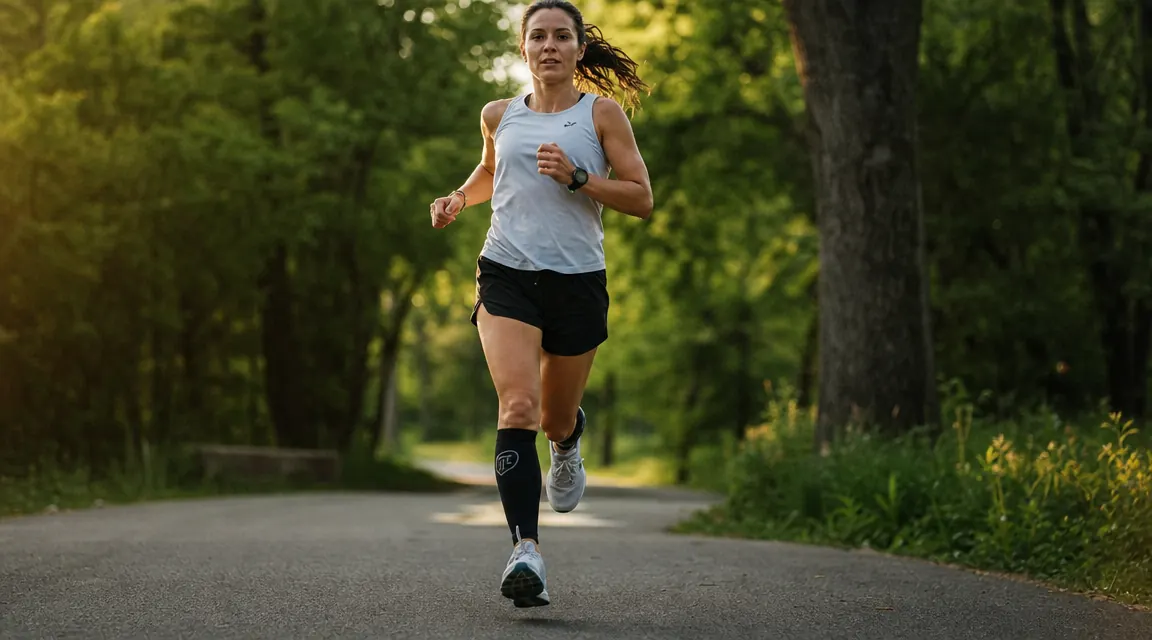
For three years running, I had a pattern. I would build mileage steadily through the first three weeks of a training block, hit week four, and feel that familiar ache settle into the inner edge of my left shin. Not a fracture-level pain. Just that dull, grinding soreness along the tibia that any runner knows: medial tibial stress syndrome, or what most people just call shin splints. I'd back off. Mileage dropped. Fitness stalled. And then I'd restart the cycle six weeks later, telling myself I'd be smarter about it this time.
I tried ice. I tried aggressive calf stretching before every run. I swapped into a higher-stack shoe with more cushion. I did every tibialis raise variation I found on YouTube. Some of it helped at the margins. None of it let me stay on schedule through a full 12-week block. The problem wasn't that I didn't know about shin splints. I work in fitness. I know the anatomy. The problem was that graded return-to-running protocols only work if you're not already mid-cycle with a half-marathon on the calendar.
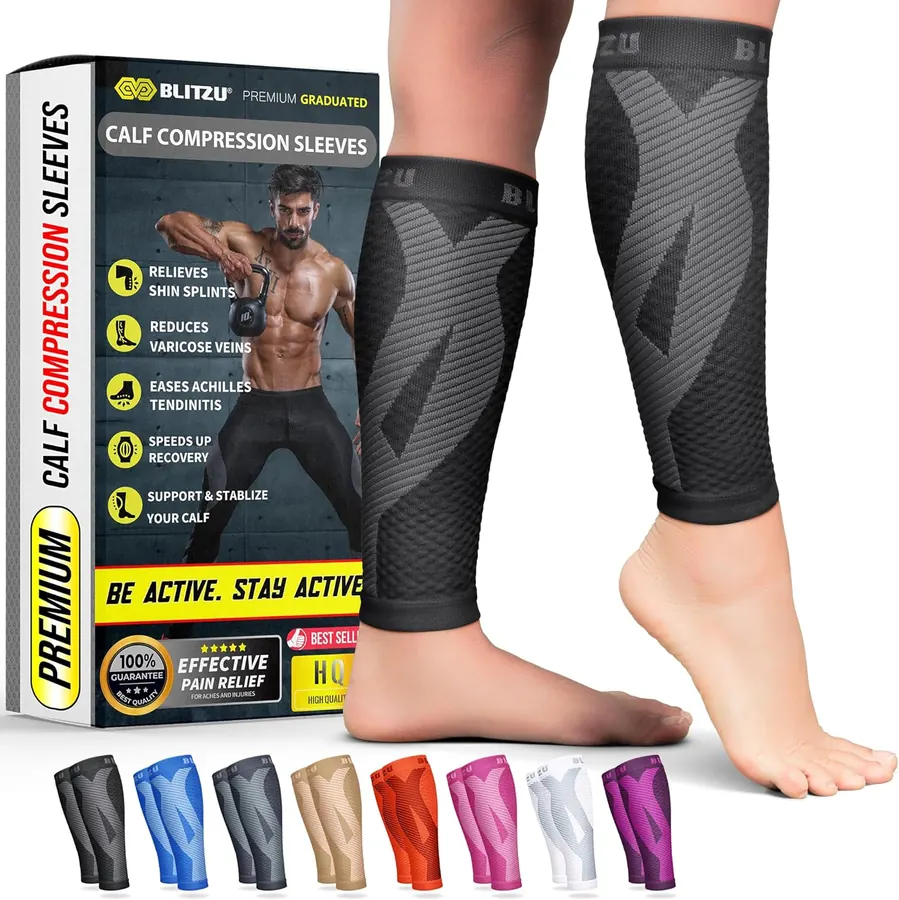
A physical therapist friend recommended calf compression sleeves in passing during a conversation about tibial stress. She mentioned that graduated compression in the 20-30 mmHg range reduces fluid accumulation in the lower leg, attenuates muscle oscillation during foot strike, and improves proprioceptive feedback to the ankle complex. She was not pitching a specific brand. She was explaining a mechanism. I went home and searched for a sleeve in that pressure range under $20. The BLITZU Calf Compression Sleeve came up first, with over 24,000 reviews and a 4.5-star average. I ordered two pairs.
Still backing off mileage because of shin pain? The BLITZU sleeve is what I use on every run now.
Over 24,000 runners and athletes have used this sleeve. It ships fast and costs less than a single sports massage session. If you're mid-cycle and need to stay consistent, this is the move.
Amazon Check Today's Price on Amazon →I started wearing them on my week-four long run. That was the week I had historically crumbled. I put both sleeves on about 20 minutes before heading out, which is what my PT friend had advised. The compression is noticeable immediately, not uncomfortable but definite. There is a feeling of the lower leg being held together rather than flopping loose with each stride. I did 8 miles that day at a conversational pace. The tibial ache showed up around mile five, which was earlier than I wanted. But it was manageable. A 4 out of 10 instead of the usual 7 that would have sent me home early.
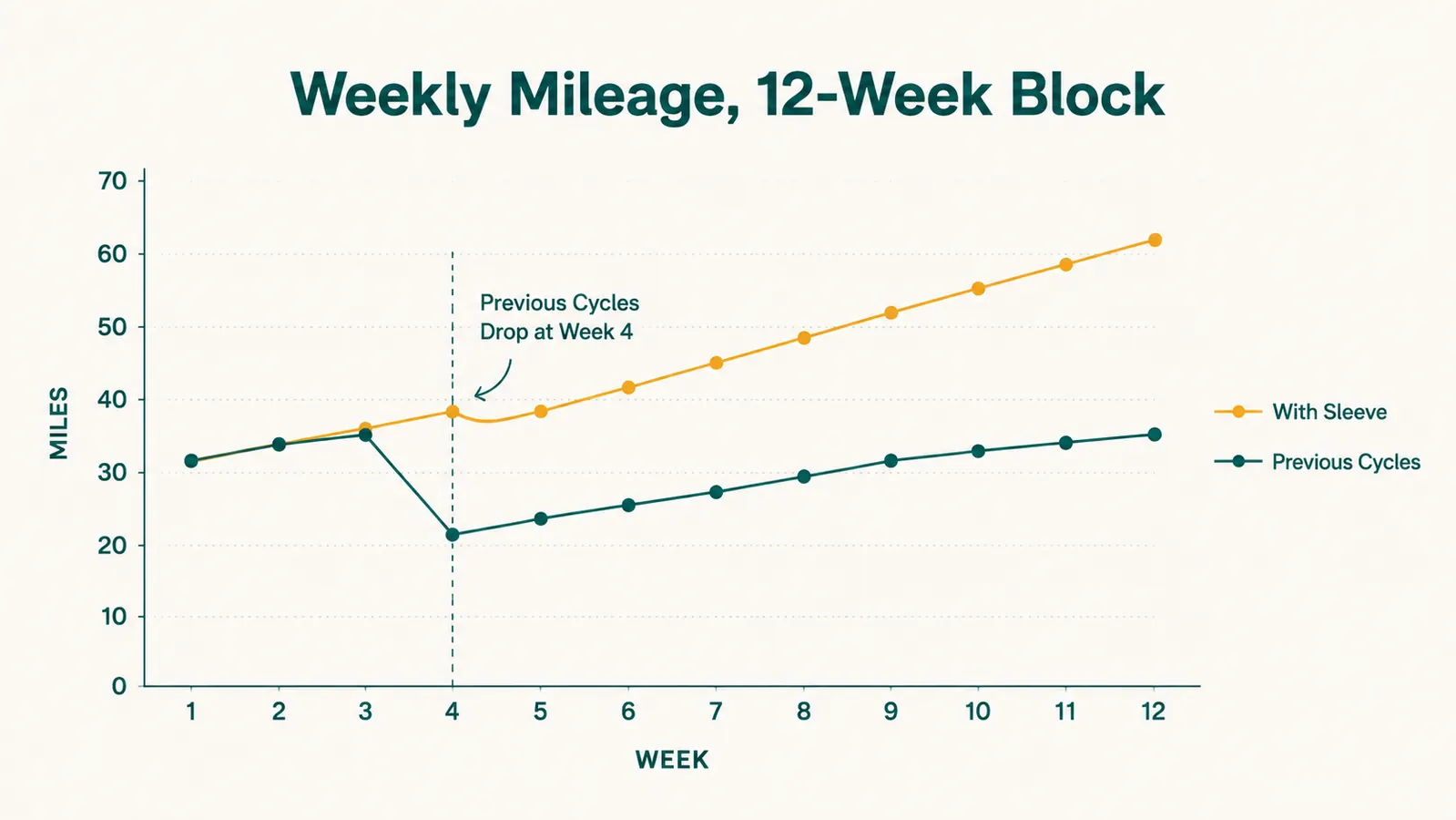
What I learned by week six is that the sleeve is not a cure. I want to be straightforward about that. If your shin splints are a bone stress reaction with actual bony tenderness on palpation, you need imaging and rest, not a sleeve. The BLITZU helped me because my issue was muscular: the tibialis posterior and soleus were accumulating microtrauma faster than they could repair between sessions. The compression reduced swelling during the run. The improved venous return sped up clearance between sessions. Combined, those two effects let me complete my runs, get adequate recovery overnight, and show up to the next session closer to baseline.
By week eight, I stopped thinking about my shins on runs. That had never happened to me mid-cycle before.
By week eight, I stopped thinking about my shins during runs entirely. That had never happened to me at this point in a training block. Week eight was usually when I was already in damage-control mode. Instead, I was logging consistent mileage and actually adapting. My long run that week was 11 miles, the longest I had run in 18 months. The sleeves were part of the stack, alongside reduced floor-surface variability (I stopped running on concrete and stayed on asphalt or trail when possible), and an extra five minutes of soleus stretching post-run. But the sleeves were the cheapest, most consistent variable.
A few honest notes on the product itself. Sizing matters more than most reviewers mention. I wear a women's size 8.5 shoe with a 14-inch calf circumference, and the medium fit perfectly. If you are between sizes, size down. A loose sleeve that slides during a run does nothing for compression and will irritate the back of the knee within a mile. The material holds up well in a standard washing machine, though I air-dry mine because I've had other athletic gear lose elasticity in the dryer. After 12 weeks of training and three washes, the compression still feels firm and consistent. No bagging, no slipping during runs.
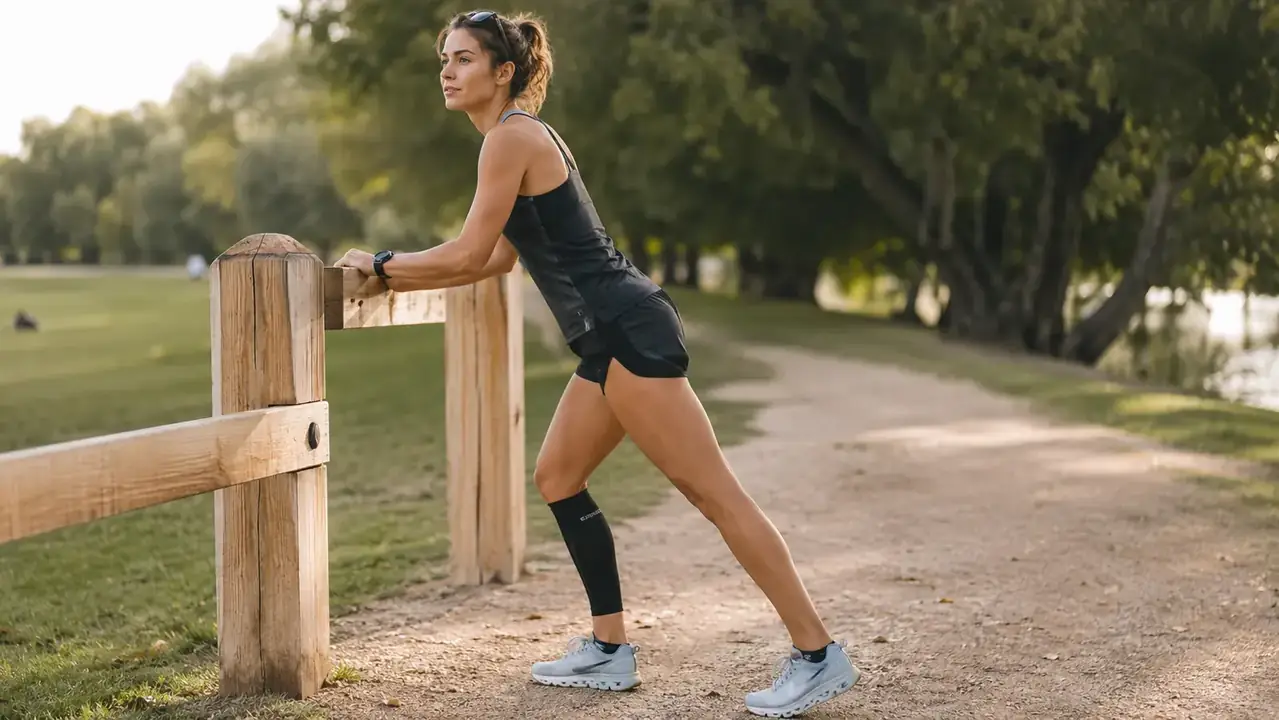
I also wore them post-run for one to two hours on the days when I could feel early tightness building. There is decent evidence that post-exercise compression accelerates lactate clearance and reduces delayed-onset muscle soreness. I cannot give you a controlled trial from my own experience, but I can tell you that my legs felt meaningfully less stiff the following morning on the days I wore them for recovery compared to the days I took them off immediately after my run. That's a subjective observation from one athlete, not a clinical claim. Take it as one data point.
What I'd Tell You If We Were Sitting at My Kitchen Table
If you have been dealing with recurrent shin splints and you are frustrated because every cycle ends the same way, I would not start with the most expensive tool in the cabinet. I would start here. The BLITZU sleeve is genuinely inexpensive relative to almost every other recovery intervention: less than a foam roller, less than a massage appointment, less than a new pair of shoes. If it works for you the way it worked for me, it pays for itself the first time it keeps you on the road through a week that would have otherwise derailed you. If it does not work for you, you are out less than fifteen dollars and a few days of experimenting.
What I would combine it with: consistent calf and soleus strength work (not just stretching), a brief run-walk progression in your first week back if you have been away from mileage, and honest mileage restraint in weeks one through three of any new block. The sleeve supports tissue that needs support. It does not substitute for the tissue adaptation that comes from progressive loading done at the right pace. Use it as part of a protocol, not instead of one. For a full breakdown of how the sleeve holds up across 400 miles of training, read our long-term BLITZU calf sleeve review. And if you want the unfiltered version including sizing complaints and wash durability, the honest BLITZU review covers everything the average star rating leaves out.
Ready to finish a training block without pulling up at week four?
The BLITZU calf compression sleeve is what I reach for every run now. Sized right, it provides real graduated compression in the range that sports medicine research actually supports. At current pricing, it is the lowest barrier-to-entry recovery tool I know of.
Amazon Check Today's Price on Amazon →