
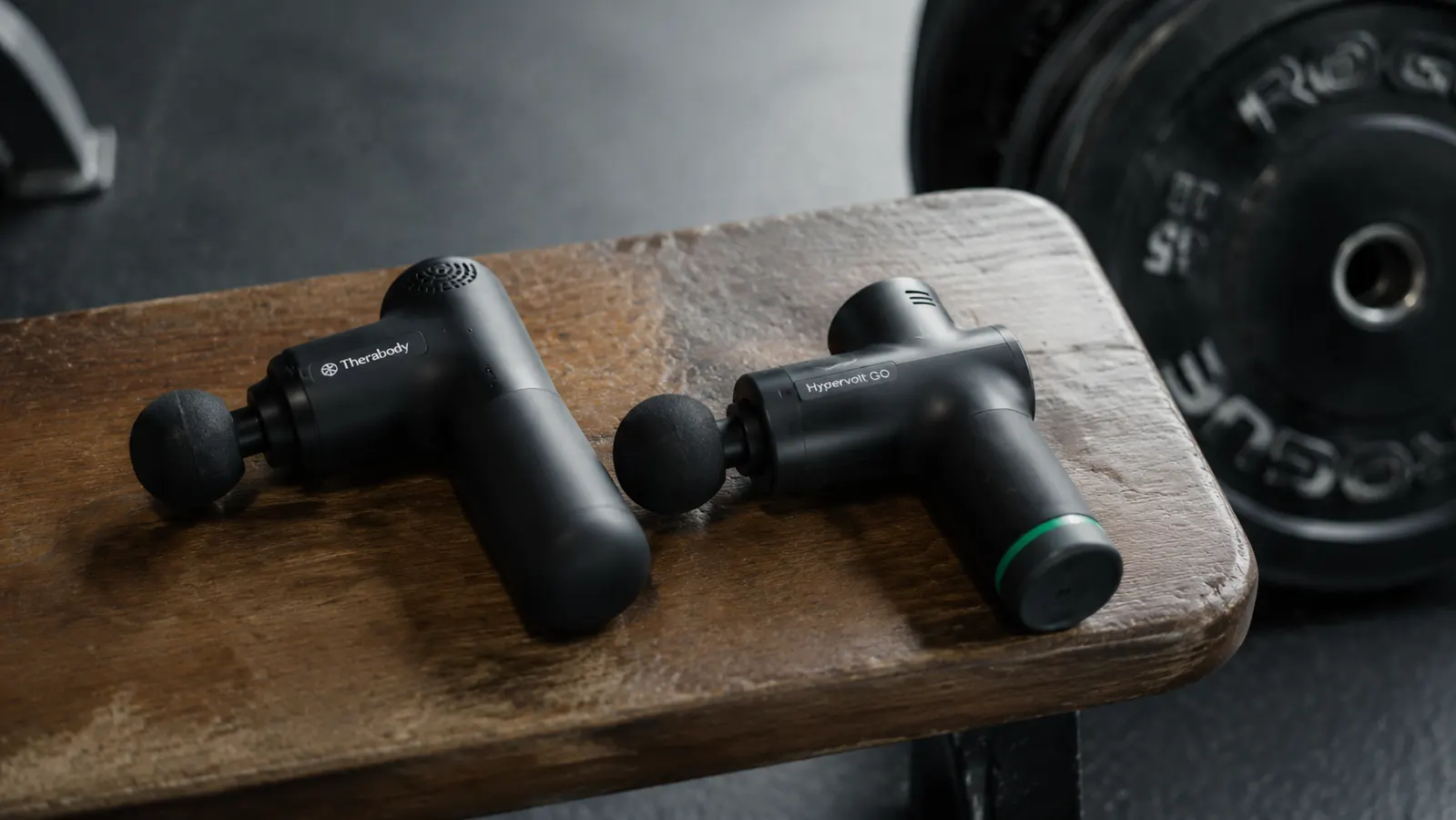
The short answer: the BOB AND BRAD Q2 Mini wins for most recreational athletes and gym regulars. It delivers more stall force (35 lbs vs roughly 20 lbs on the Theragun Relief), a longer rated battery life (up to 6 hours vs around 2 hours), and a lower noise floor, all at roughly half the price of the Relief. The Theragun Relief has Theragun's brand recognition and a slightly cleaner ergonomic feel in the hand, but neither advantage justifies a 2x price premium for the typical person using a percussion massager 10 to 15 minutes per session after training.
That said, the right choice depends on how you train and where you carry it. If you travel with your kit, want USB-C charging, and train 5 or more days per week, the Q2 Mini is the clearer pick. If you are brand-loyal to Theragun, already in the Theragun ecosystem (Bluetooth app, other Theragun devices), or specifically want the Relief's angled head for trapezius self-treatment, there is a use case for it. This breakdown covers the specific numbers so you can make an informed call.
| attribute | left | right | winner |
| attribute | left | right | winner |
| attribute | left | right | winner |
| attribute | left | right | winner |
| attribute | left | right | winner |
| attribute | left | right | winner |
| attribute | left | right | winner |
| attribute | left | right | winner |
| attribute | left | right | winner |
| attribute | left | right | winner |
| attribute | left | right | winner |
| attribute | left | right | winner |
Where the BOB AND BRAD Q2 Mini Wins
Stall force is the most practically important spec most buyers ignore. It tells you how hard you can press before the motor bogs down and stops percussing. The Q2 Mini is rated at 35 lbs of stall force. The Theragun Relief sits closer to 20 lbs, which puts it in the same tier as many generic budget massagers. Why does this matter? When you are working a loaded glute, a tight IT band, or deep hip rotators in someone who actually trains, you need sustained pressure, not a motor that cuts out when you lean into it. At 35 lbs, the Q2 Mini handles legitimate athletic use. At 20 lbs, the Relief is better suited to someone who needs light percussion for neck tension or general relaxation.
Battery life is the other decisive category. The Q2 Mini's 6-hour rated battery means you charge it once or twice per week on a typical training schedule. The Relief's 2-hour battery means you are charging after roughly 8 sessions if you use it for 15 minutes a session. That does not sound catastrophic until you grab the Relief out of your bag at the gym and realize it died between Tuesday and Thursday. The Q2 Mini also charges via standard USB-C, so it charges off the same cable as your phone. The Theragun Relief uses a proprietary magnetic charging dock, which is one more cable you have to track and one more thing to forget when you travel.
On noise, the Q2 Mini's brushless motor runs quieter than the Relief at comparable speeds, particularly on the two lower settings where most session time is spent. The Q2 Mini sits around 45 decibels on speed 1 or 2. The Relief is closer to 53 decibels. Over a 10-minute session at 6 a.m. in an apartment, that difference matters. For gym use it is less relevant, but the Q2 Mini being usable while watching film or having a conversation is a genuine quality-of-life advantage.
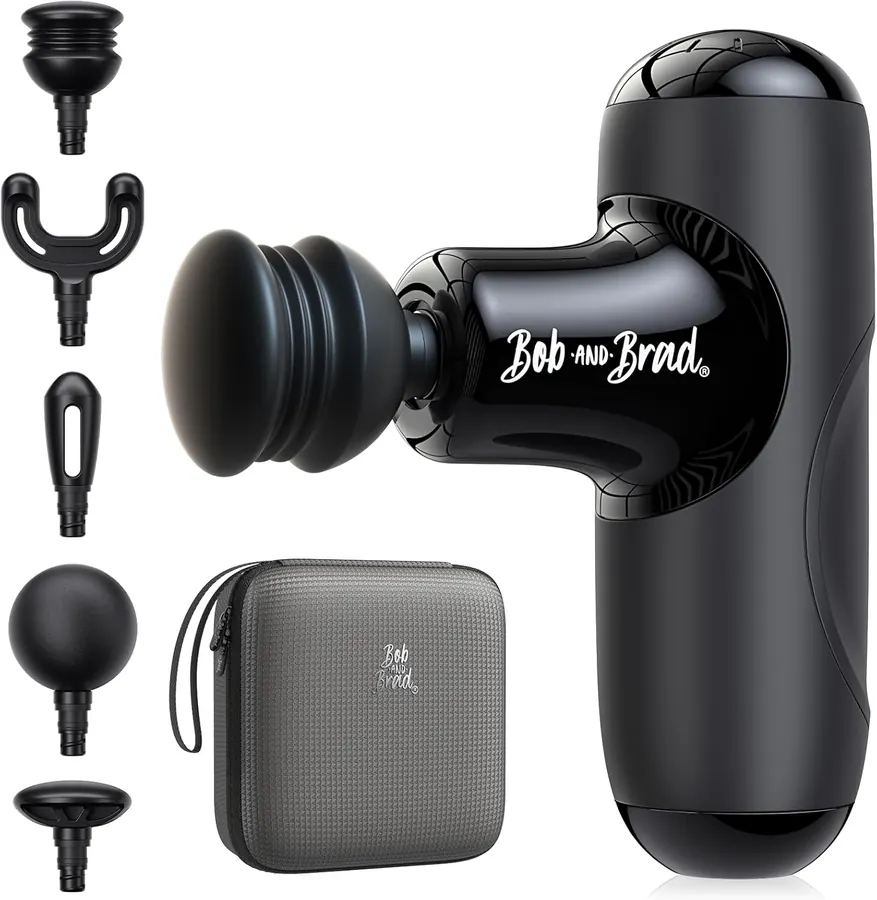
The Q2 Mini also ships with 4 attachment heads: ball, flat, fork, and bullet. The ball is your general-use default. The fork is for paraspinal muscles along the spine. The flat is for larger surface areas like quads and hamstrings. The bullet targets trigger points. The Relief includes only a standard ball and a dampener head. If you want more than the ball on a Theragun Relief, you are buying additional Theragun attachments separately.
If you train 4+ days per week and want a massager that can actually keep up, the Q2 Mini is the practical choice at this price.
With 35 lbs of stall force, 6-hour battery, USB-C charging, and 4 included attachments, the BOB AND BRAD Q2 Mini handles post-workout recovery without the Theragun price premium.
Amazon Check Today's Price on Amazon →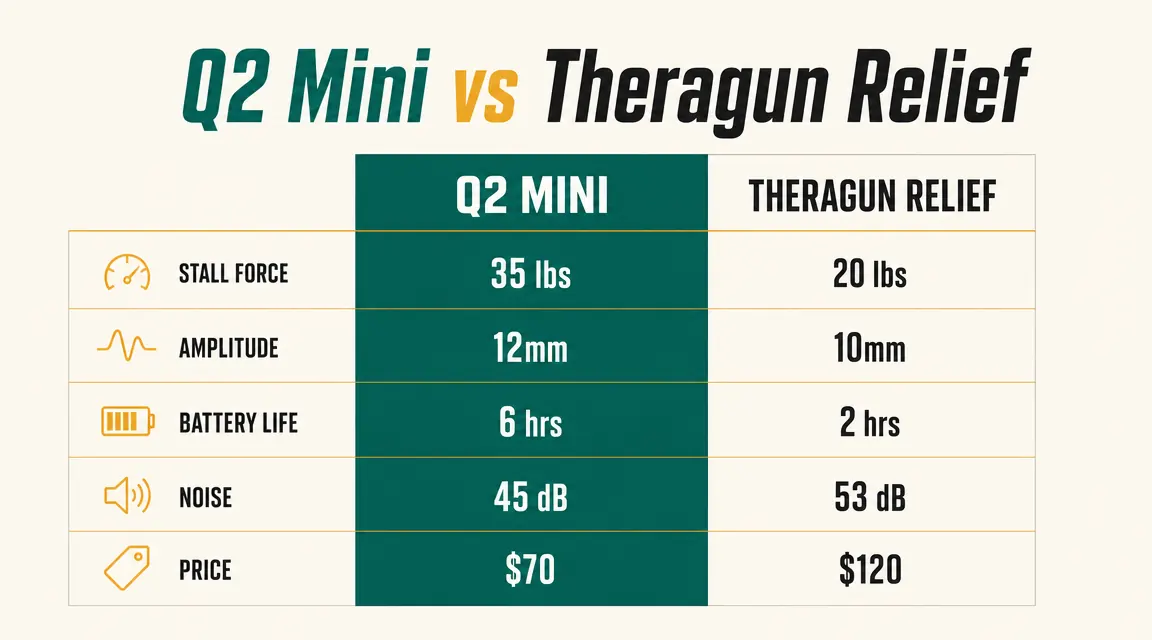
Where the Theragun Relief Wins
The Theragun Relief's triangular ergonomic handle is a genuine design advantage for specific body regions. The angled grip lets you reach behind your own trapezius, between your shoulder blades, and across your lower back without contorting your wrist into an uncomfortable position. The Q2 Mini has a straight grip like most compact massagers, which works well for legs, arms, and lateral hip work but becomes awkward when you are trying to angle the head up across your own upper back. If self-treatment of the thoracic spine and upper traps is a regular part of your routine, the Relief's handle geometry solves a real problem.
The Theragun app integration is the other legitimate differentiator. Through the app, you get guided protocols for specific muscles and recovery goals, and Theragun's coaching content is actually reasonably well produced. If you are newer to percussion massage and want structured guidance rather than figuring out timing and technique on your own, the app adds genuine value. That said, most people stop using the app within a few weeks once they have a feel for their own protocol, so this advantage is front-loaded toward the first month of ownership. For experienced trainers, it is mostly noise.
The Theragun Relief's angled handle solves a real problem for upper-back self-treatment. For everything else, you are paying a significant premium for brand equity over engineering.
Who Should Buy Which
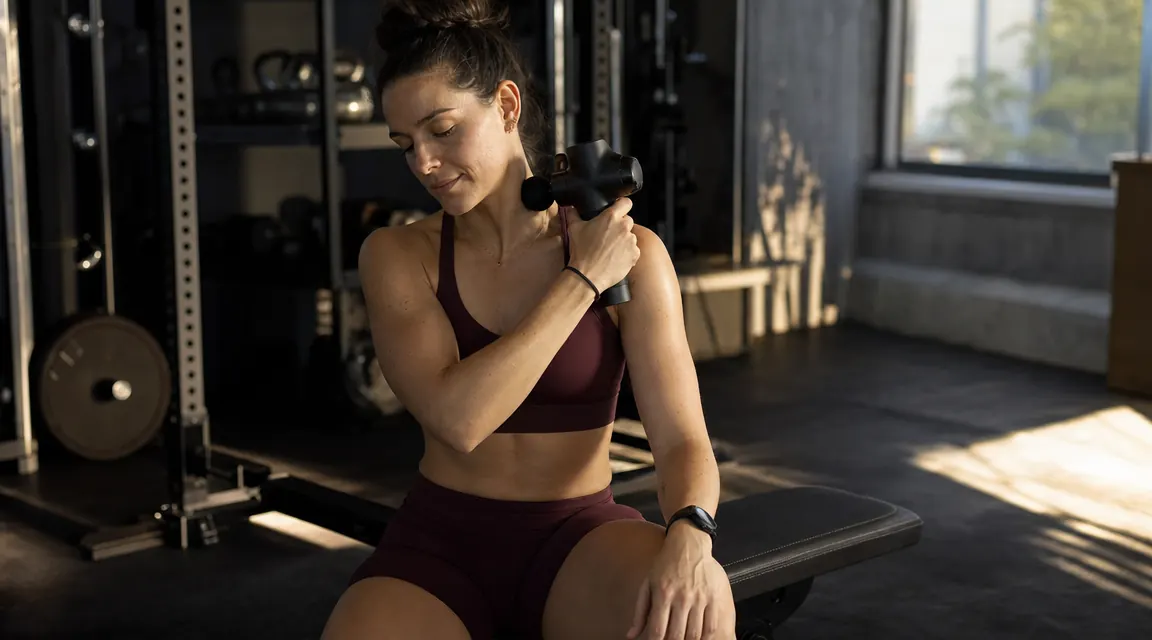
Buy the BOB AND BRAD Q2 Mini if: you train 3 or more days per week, you want a tool that handles both pre-workout priming and post-workout flushing, your primary targets are legs, hips, and calves, you charge via USB-C and do not want to carry extra cables, or you are comparing value and want the most stall force per dollar in the mini-gun category. This covers probably 80 percent of people shopping this segment.
Buy the Theragun Relief if: you are already in the Theragun ecosystem and want to share accessories, you specifically need the angled handle for thoracic and trapezius work and the straight-grip alternatives feel awkward to you, or the Theragun app protocols are genuinely useful to you and you will keep using them past the first month. If none of those three conditions apply, the Relief's price premium is hard to justify on hardware specs alone.
One other consideration: the Q2 Mini's 4.7-star average across more than 15,000 Amazon reviews gives you real signal about long-term reliability. The Theragun Relief has fewer reviews at a higher price point and more noise from buyers who crossed over from other Theragun models and found it underwhelming. That review disparity is not conclusive, but it is directionally useful when you are deciding where to put your money.
For a deeper look at long-term use of the Q2 Mini specifically, including how it holds up after 6 months of daily sessions and which attachment gets used most, see the full BOB AND BRAD Q2 Mini long-term review. If you want to dial in your massage gun technique after you choose one, the step-by-step protocol for using a massage gun on sore muscles covers timing, attachment selection, and duration by muscle group.
The Q2 Mini outperforms the Theragun Relief on every hardware spec that matters for serious training use.
Half the price, nearly double the stall force, three times the battery life, and USB-C charging. The BOB AND BRAD Q2 Mini is the better tool for most athletes, and the numbers make that case clearly.
Amazon Check Today's Price on Amazon →