
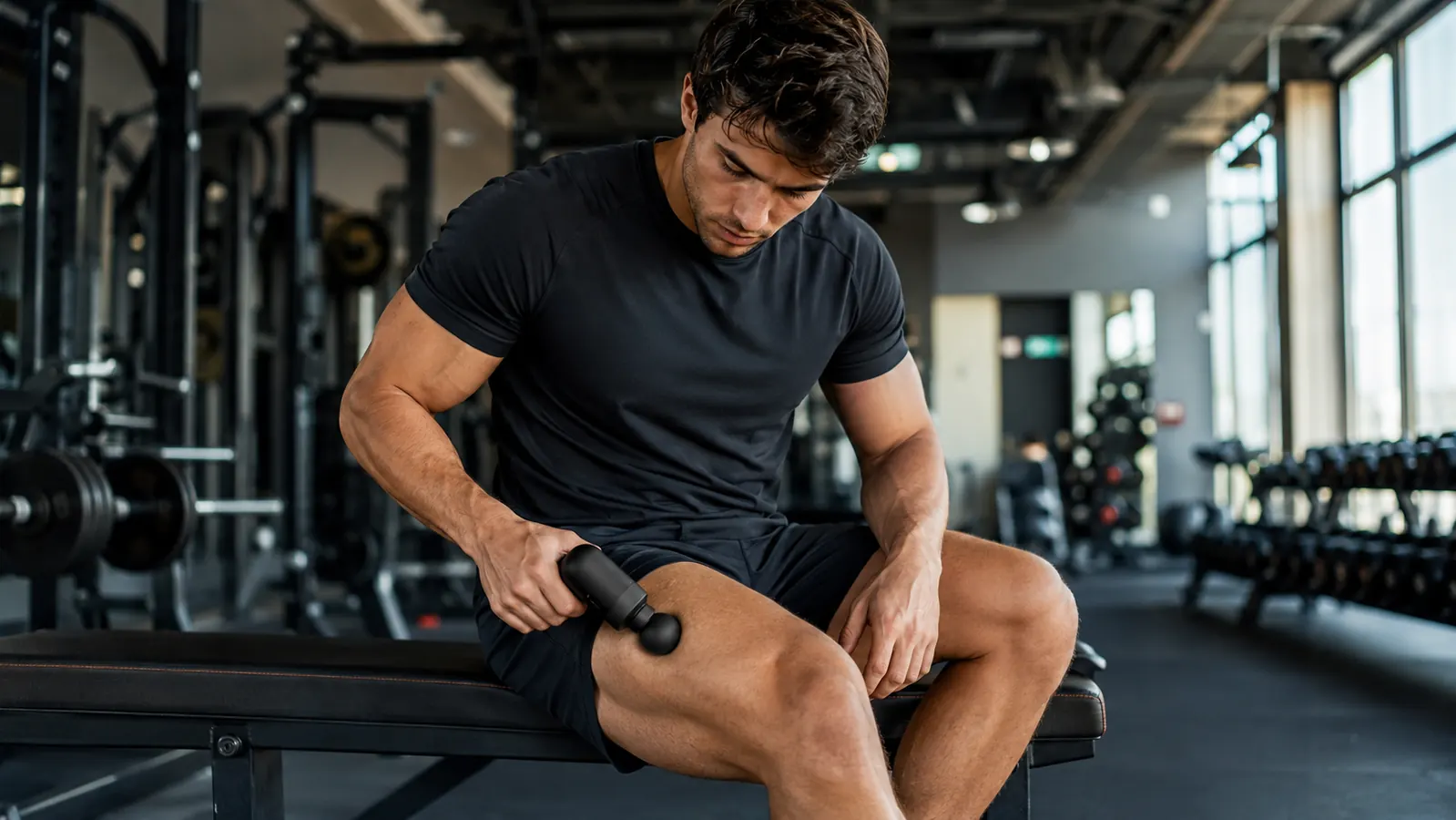
I have been lifting four days a week for about nine years. I know what delayed-onset muscle soreness feels like. I also know the drill that most people run to deal with it: foam roll for ten minutes, stretch, maybe take a hot shower. That routine worked well enough that I never questioned it. Then a physical therapist friend of mine pointed at my foam roller and said, 'That's good for mobility. It is not the same as percussion therapy.' She handed me a small massage gun and told me to use it on my quads for three minutes after my next leg session. I nodded, put it back on her desk, and did not think much of it.
Six months later I bought the BOB AND BRAD Q2 Mini after watching my training partner recover from a heavy squat session faster than I did, three weeks in a row. He is 43. I am 38. I started asking questions.
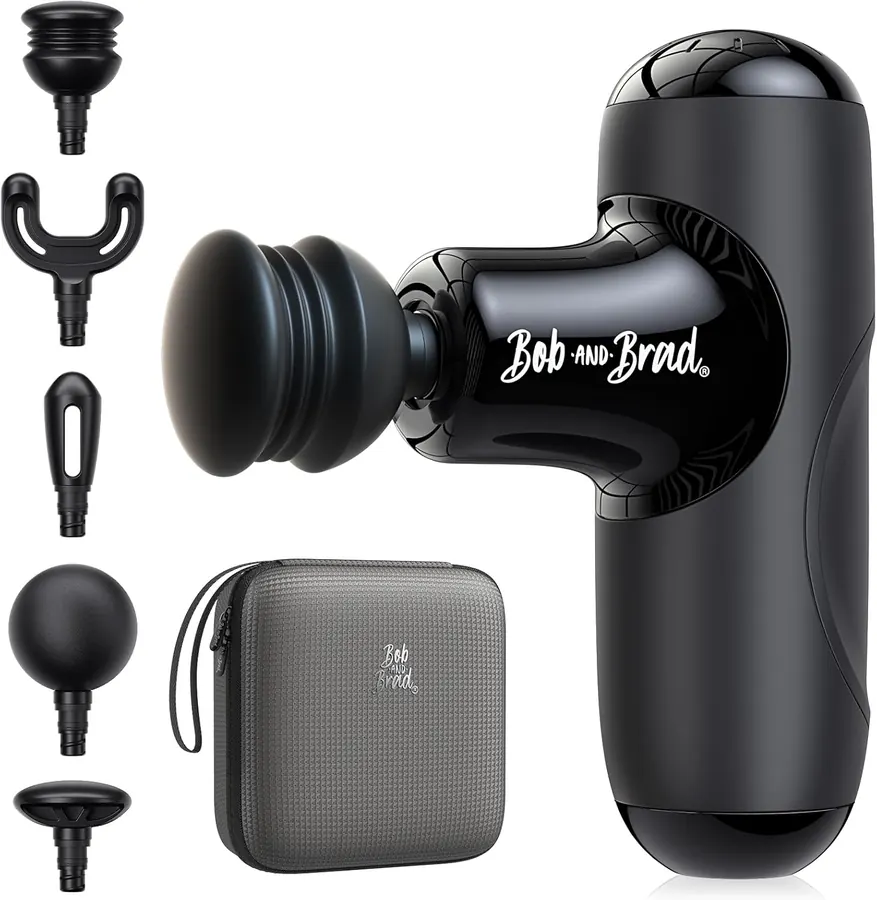
The Q2 Mini costs about what I spend on two sports massages. It fits in the front pocket of my gym bag. It has four speed settings, six attachments, and a battery that lasts through a full training week before it needs a charge. When I first used it on my hamstrings the night after a 400-pound deadlift session, I expected to feel the way I always do the next morning: stiff from the hips to the knees, taking the stairs sideways like a crab. Instead I woke up sore in the way that means the work landed, not sore in the way that slows you down for two days.
I want to be specific about what changed, because I hate vague recovery content. At two weeks, the biggest difference was in my quads. I have always carried soreness there for 48 to 72 hours after a heavy lower-body session. With the Q2 Mini, that window tightened to about 30 hours. I was using it for four minutes per quad immediately after training, running the round-head attachment at speed three. Not dramatic, but noticeable enough that I adjusted my training schedule. I moved my leg day from Wednesday to Tuesday because I no longer needed a full day buffer before my Thursday session.
At two weeks, soreness that used to park in my quads for 72 hours was clearing in 30. I rescheduled my training block around that.
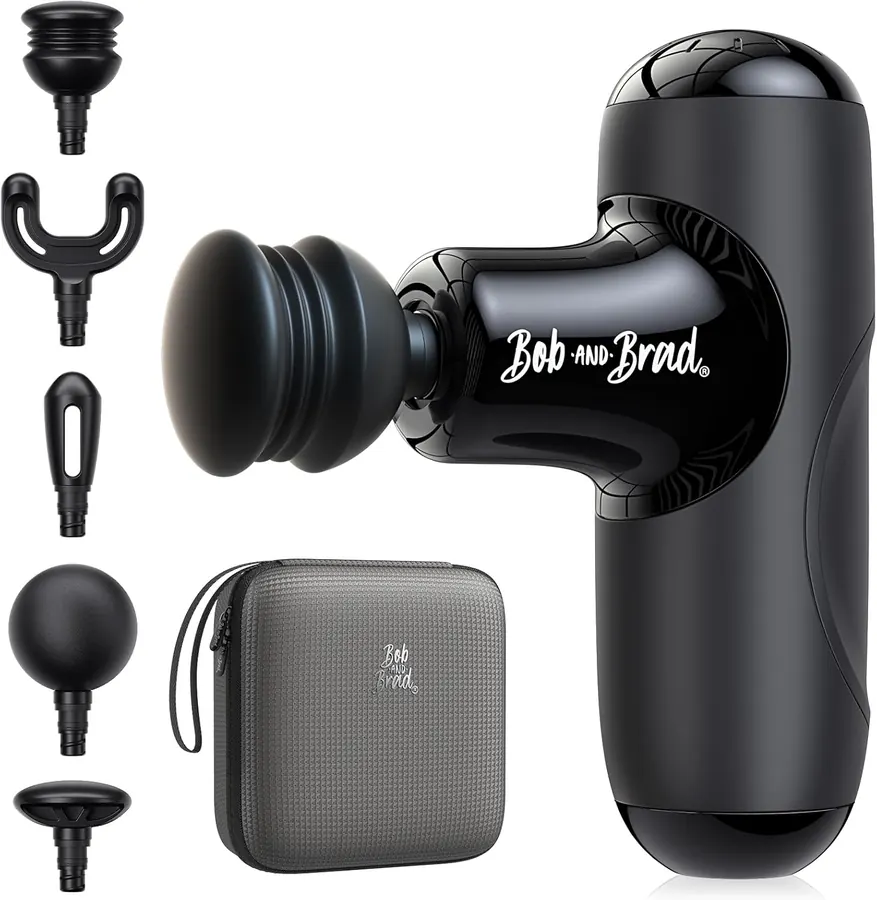
At six weeks, the change that surprised me most was in my calves. I run on weekends and have had chronic tightness in my left Achilles tendon area for two years. Not an injury, just that nagging pull that makes you stretch before you get out of bed in the morning. I started running the Q-cup attachment along my gastroc and soleus for two minutes each side on Friday nights after my run. By week five, the morning Achilles pull was mostly gone. I am not going to tell you percussion therapy healed a two-year problem. What I will tell you is that consistent soft-tissue work on a daily or near-daily basis did something that occasional foam rolling and stretching did not.
The device has real limitations and you should know them before you buy. The stall force is on the lower end compared to clinical-grade guns. If you weigh 200 pounds and have extremely dense posterior chain tissue, you may find the Q2 Mini does not penetrate deeply enough on your glutes or upper traps without applying hand pressure to supplement. I manage this by placing my free hand over the attachment head when working dense areas. It is a minor workaround but it is a workaround. The travel case is soft-sided, which is fine for a gym bag but would not survive a checked luggage situation. And at the lowest speed, the head movement is subtle enough that I sometimes wonder if I should be on setting two instead. There is no setting that is clearly too gentle or too aggressive, which I actually appreciate, but beginners may want clearer guidance on where to start.
Your muscles are carrying more tension than your foam roller can reach.
The BOB AND BRAD Q2 Mini delivers percussion therapy at four depth-adjustable speeds. Six attachments cover every muscle group. Battery lasts a full training week. Small enough to live in your gym bag.
Amazon Check Today's Price on Amazon →Three months in, the Q2 Mini has replaced my foam roller as the first tool I reach for after training. Not because foam rolling is useless, it is genuinely good for hip mobility and thoracic extension, but because for pure post-workout muscle recovery the percussion work does more in less time. I still roll twice a week on rest days. The two tools serve different purposes now that I have both.
What I did not expect was how much better my sleep got during the first heavy training block I ran while using the gun consistently. This is harder to attribute cleanly because sleep has a dozen variables, but the pattern was consistent enough that I noticed it: on nights when I used the Q2 Mini before bed after a hard session, I fell asleep faster and woke up less often. Sports medicine research on percussion therapy and parasympathetic nervous system activation is still building, but there is a plausible mechanism there. My interpretation is simple: muscles that are not screaming let you sleep.
What I'd Tell You If We Were Sitting at My Kitchen Table
If you are training four or more times a week and your recovery tool is a foam roller and some stretching, you are leaving real results on the floor. Not because those things do not work, they do, but because percussion therapy addresses something different: the muscle tension and micro-damage that accumulates in the 24 hours after a hard session, before the soreness has even peaked. Getting ahead of that window is where the Q2 Mini earns its cost over and over. I would tell you to skip the full-size Theragun until you know you want percussion therapy in your life. Start with the Q2 Mini. If you use it consistently for a month and your recovery does not improve meaningfully, it is a small enough investment that you are not out much. In nine years of training, I have spent that much on supplements that did nothing in the first week. This one worked inside ten days.
If you want the full breakdown including a comparison against the Theragun Relief, how the six attachments differ, and long-term battery performance, I put together a detailed write-up: six months of daily use with the BOB AND BRAD Q2 Mini. If you are still on the fence and want the sharper honest-review take, including what I would change about the design, check the honest review of the Q2 Mini.
Still recovering slower than your training schedule allows?
The BOB AND BRAD Q2 Mini is rated 4.7 stars by over 15,000 verified buyers. Pocket-sized. Six attachments. One week of battery per charge. It belongs in your bag after every hard session.
Amazon Check Today's Price on Amazon →